Written by Amie Kusch, Anna Lewis, Bea Pickett, Emily Bews, and Madison Gard
Editor-in-Chief – Madison Gard
Maddie grew up in the Sonoran Desert of Tucson, Arizona before moving to Bellingham, Washington six years ago. As an undergraduate at Western Washington University, she researched the foraging behavior of harbor seals, the diets of Steller sea lions, and their ecological relationships as predators to migrating salmon in the Salish Sea. After graduation, Maddie stuck around in the Pacific Northwest by working on the Mountains to Sound Greenway Trust Trail Crew, practicing daily land stewardship throughout Washington’s largest National Heritage Area. Within SMEA, she is enthusiastic to merge her love for ecological research with interdisciplinary strategies for making an impact. As a thesis student, Maddie is a research assistant for Washington Ocean Acidification Center and the eDNA Collaborative. She studies the harmful algal bloom species, Alexandrium catenella, which produces paralytic shellfish toxins in Puget Sound. Her project uses eDNA from a time series of filtered water samples to quantify the abundance of A. catenella in order to investigate the species’ relationships with environmental conditions such as ocean warming and acidification.
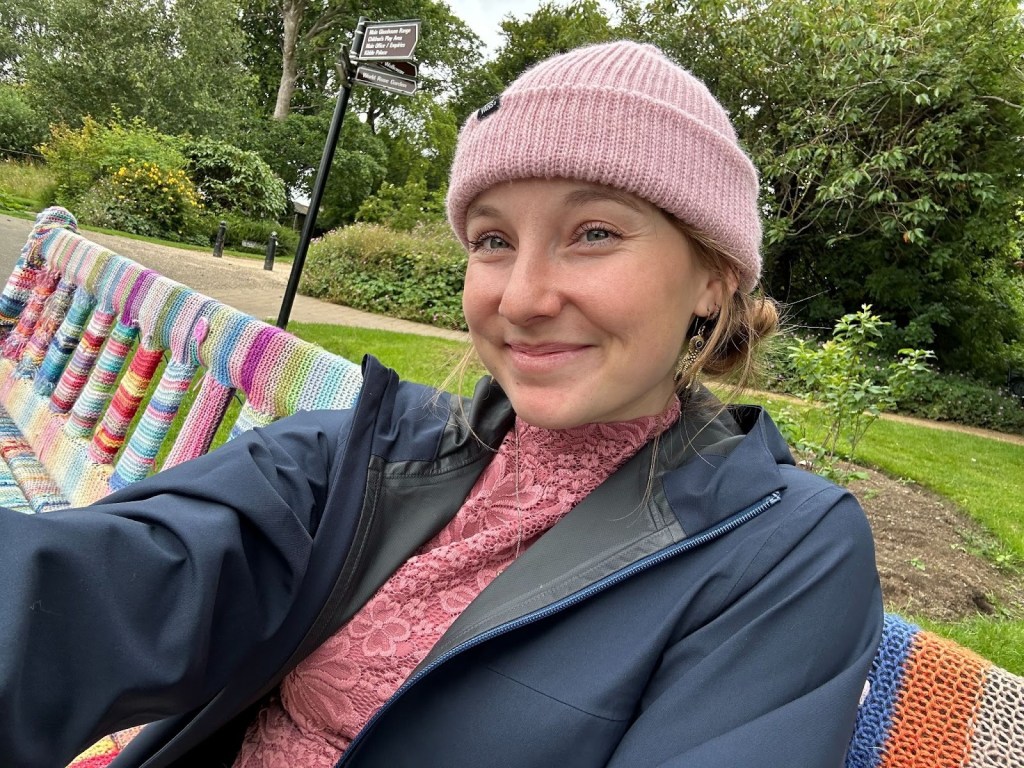
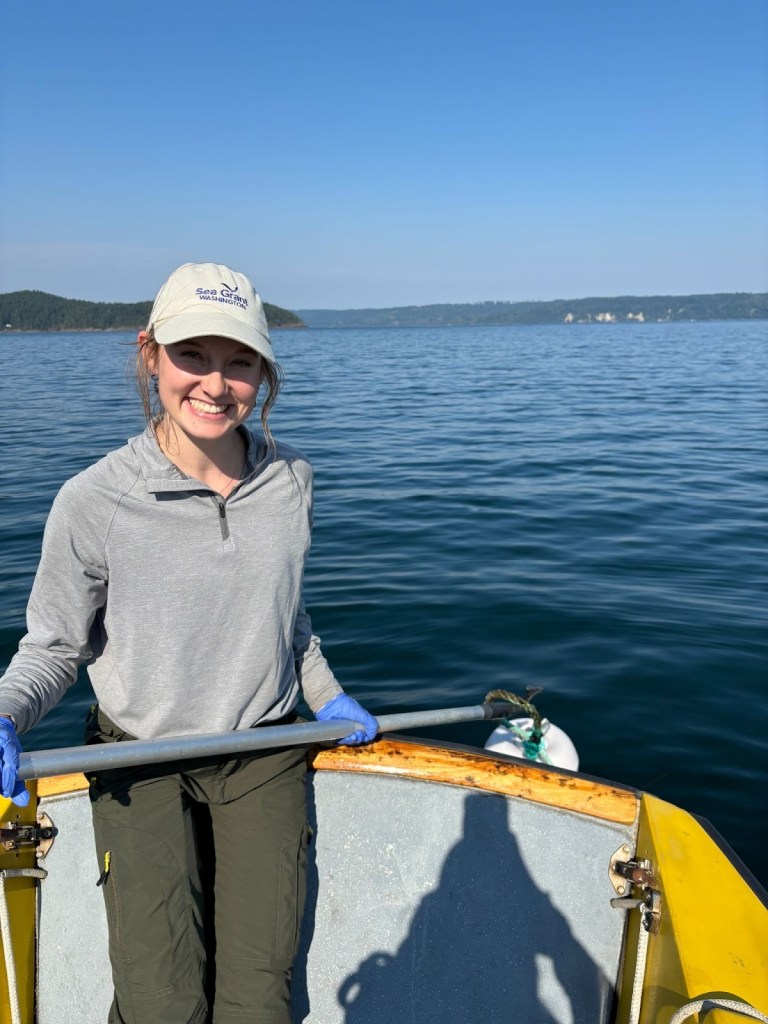
This summer, Maddie spent much of her time gloved-up in a lab coat with micropipettes and PCR thermocyclers to keep her company. Working in the Center for Environmental Genomics laboratory, she made significant progress developing the eDNA methodologies and data that will be used in her thesis analysis. Outside of the lab, Maddie made sure to touch grass and soak up some sunshine by paddleboarding, camping, and hammocking with friends. She also enjoyed running along Seattle’s many waterfronts training for the Anacortes Half-Marathon this September. Maddie is thrilled to serve as the Editor-in-Chief for Currents this year and eager to support the wonderful work produced by SMEA-ple.
Managing Editor – Emily Bews
Emily was raised in Los Angeles, California, and attended San Diego State University where she discovered her passion for research and conservation while earning her B.S. in Environmental Sciences. During this time she studied abroad in Madagascar and earned her initial dive certifications while participating in a reef monitoring and coral restoration project. Back at SDSU she conducted research examining the effects of salinity and nutrients on the seaweed commonly known as sea lettuce (Ulva lactuca). After graduating in 2020, she earned a position as an aquaculture research assistant at Hubbs-Seaworld Research Institute on their Integrated Multi-Trophic Aquaculture research program. Later, she joined the UCSB SONGS Mitigation Monitoring Program as a scientific diver, collecting biological data to support long-term monitoring of an artificial reef. Emily moved to Seattle in 2023, completed her divemaster training, and has since been guiding dive tours and leading cold-water orientations throughout Puget Sound for the past two years, connecting her love for marine science with public engagement and communication. She joined SMEA in 2024 to continue exploring her passions, and has been working on her thesis with her advisor Terrie Klinger titled Predictive habitat suitability modeling for bull kelp (Nereocystis luetkeana) in San Juan County, Washington. Her work is focused on examining the environmental drivers that influence the distribution of suitable habitat for bull kelp in the San Juan County region to help inform future restoration and conservation efforts.
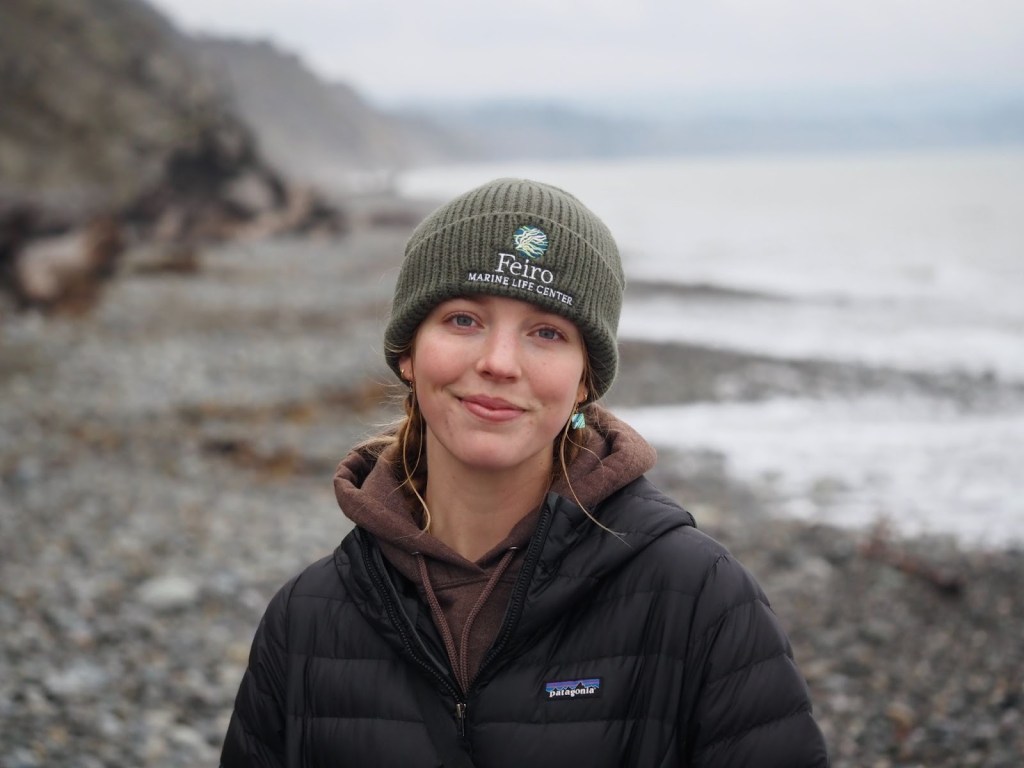
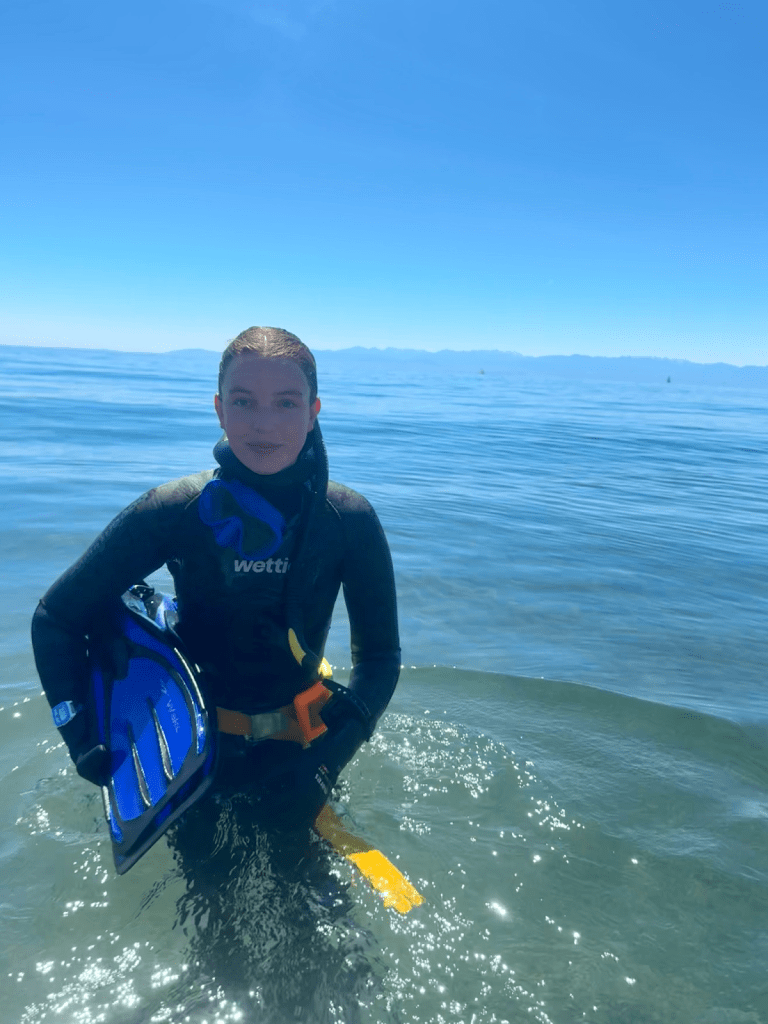
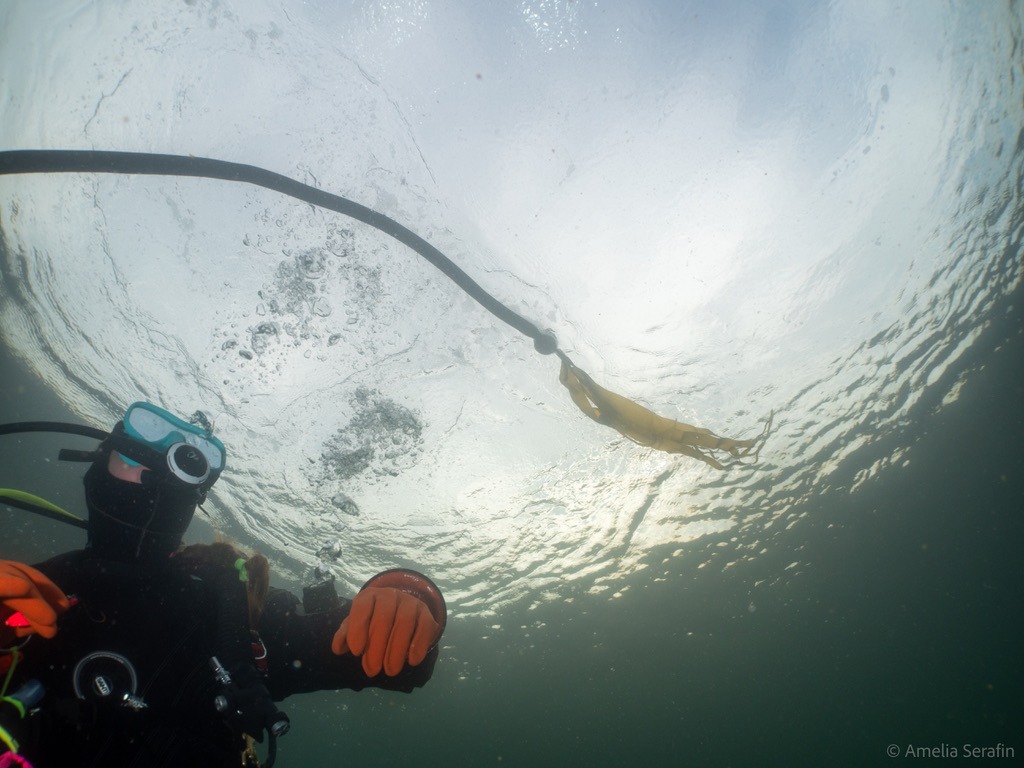
This summer Emily lived at University of Washington’s marine lab, Friday Harbor Laboratories, on San Juan Island. She spent her summer working on her research at the labs and snorkeling around San Juan Island to collect bull kelp presence data that will be used for validating her findings. She made the most of her time up in the islands—exploring as much of San Juan as possible (on land and in water!), attending community events and concerts, and connecting with folks involved in kelp conservation and monitoring efforts.
Art Director – Anna Lewis
Anna grew up in Martinsville, Virginia, before moving towards Washington, D.C. for undergrad. She has always had a passion for writing and politics which pushed her to major in creative writing and international affairs. After graduating, Anna moved to Charlottesville, Virginia, to work for a research organization specializing in international conflict, humanitarian aid, vaccine uptake, human rights, and terrorism in conjunction with the United Nations, the Gates Foundation, Department of Defense, and many NGOs. At that job, she began to see the connection between climate change, conflict, and human rights all over the world and even had the opportunity to travel to many countries where her research was taking place. She inevitably decided that going back to school to hone this new focus was her next step. Anna is currently working on her thesis with advisor, Nives Dolšak, on the role of rare earth elements in the global green energy transition.
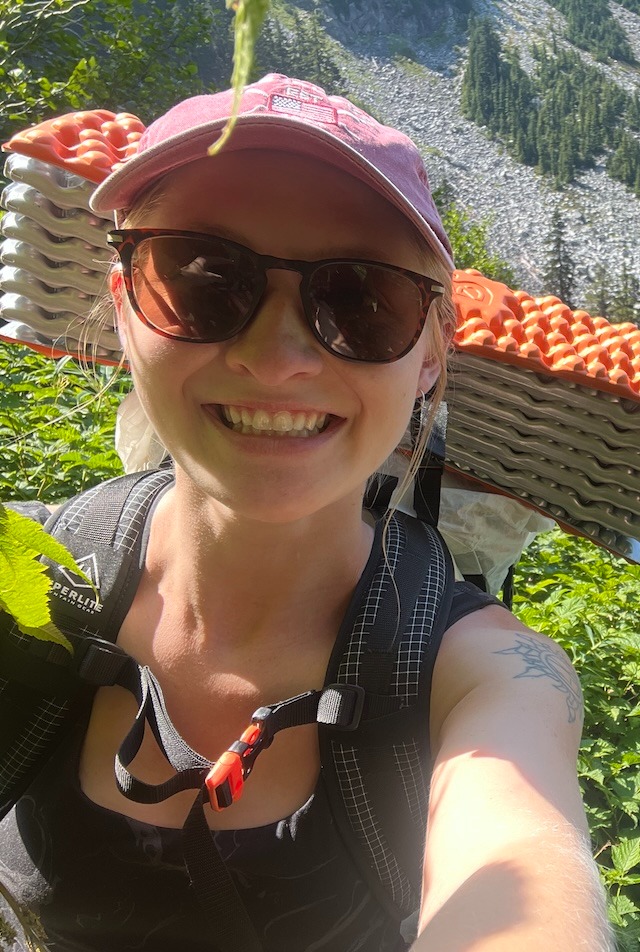
This summer, Anna spent most of her time traversing the US to see her family back on the East Coast, visiting the mountainous regions in Mexico, and backpacking with her people in Seattle. When in one place, you could usually find her reading on her paddleboard in Greenlake, playing soccer/ultimate frisbee, or continuing to work on her thesis at various coffee shops, breweries, book shops, and rooftops.
Copy Editor – Bea Pickett
Growing up in Portland, Oregon, Bea developed an appreciation for nature and a commitment to environmental protection while exploring the beaches and forests of the Pacific Northwest. Her curiosity carried her to Yale University, where she tackled an undergraduate double major in Environmental Studies and Political Science, a combination that enabled her to explore environmental policy from all angles. Bea spent two years working for the U.S. Environmental Protection Agency’s New England regional office in Boston, implementing climate and clean energy programs and gaining a greater appreciation for the intricacy of government policy work. Bea returned to the Pacific Northwest to begin her graduate studies at SMEA, a program that called to her because of its interdisciplinary approach to environmental issues. Bea is working on a capstone project advised by Dr. Ryan Kelly, exploring tensions between emerging eDNA research practices and legal frameworks for wildlife protection.
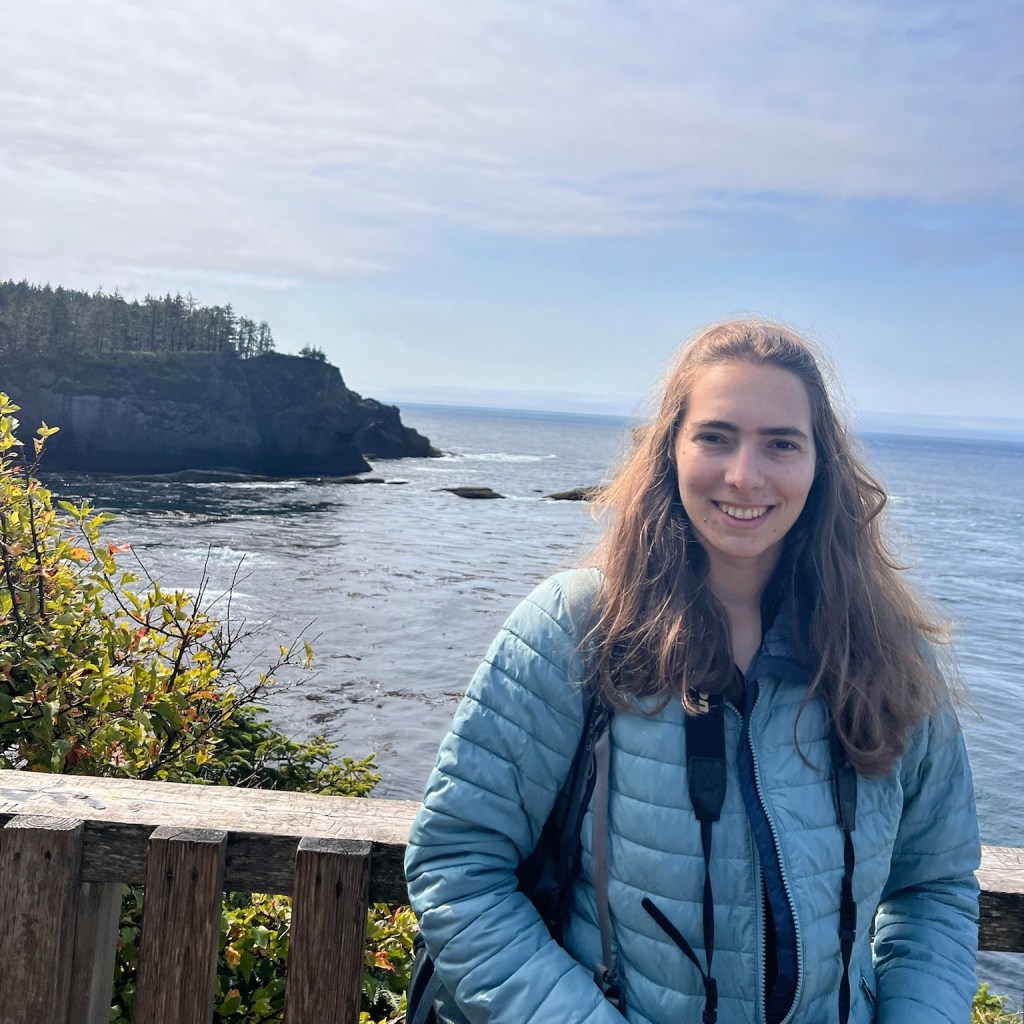
Since arriving at SMEA, Bea discovered a proclivity for environmental education work and student mentorship while serving as a teaching assistant for multiple undergraduate environmental studies classes. This summer, Bea further explored environmental education by working as a youth educator at the Woodland Park Zoo. Most recently, Bea stepped up to serve as the course instructor for an undergraduate course on research methods in environmental studies. As the copy editor of Currents, Bea is excited to mentor student authors in the development of their writing. When she isn’t preparing lectures or copy-editing Currents articles, you can find her baking, hiking, paddleboarding, or Scuba diving.
Social Media Coordinator – Amie Kusch
Amie grew up in Milwaukee, Wisconsin, and moved to Bozeman, Montana, for college. Ironically, she discovered her passion for ocean advocacy during her eight years living in the landlocked state. She earned a Bachelor of Letters and Science in Fish and Wildlife Ecology and Management from Montana State University. After graduating, Amie worked as a Field Representative for U.S. Senator Jon Tester, and later as a Program Assistant at Natural Resources Defense Council, where she supported initiatives focused on protecting wildlife. As a second year at SMEA, Amie is working with her advisor, Dave Fluharty, on a capstone focused on the Guidelines for Sustainable Aquaculture developed by the UN Food and Agriculture Organization.
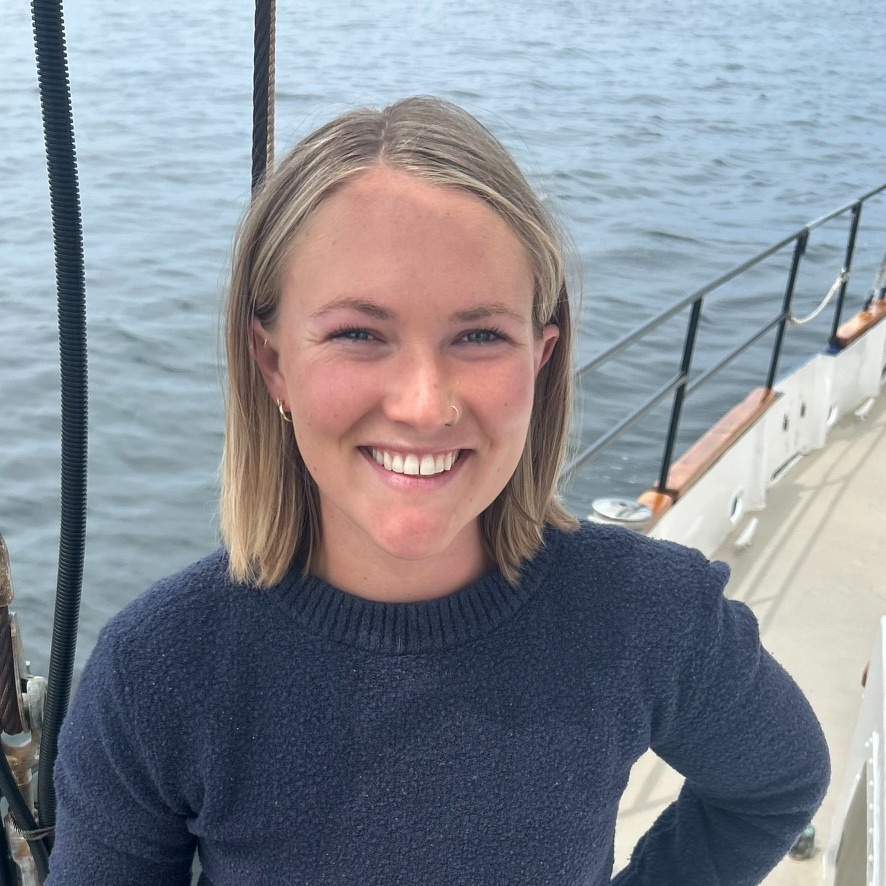
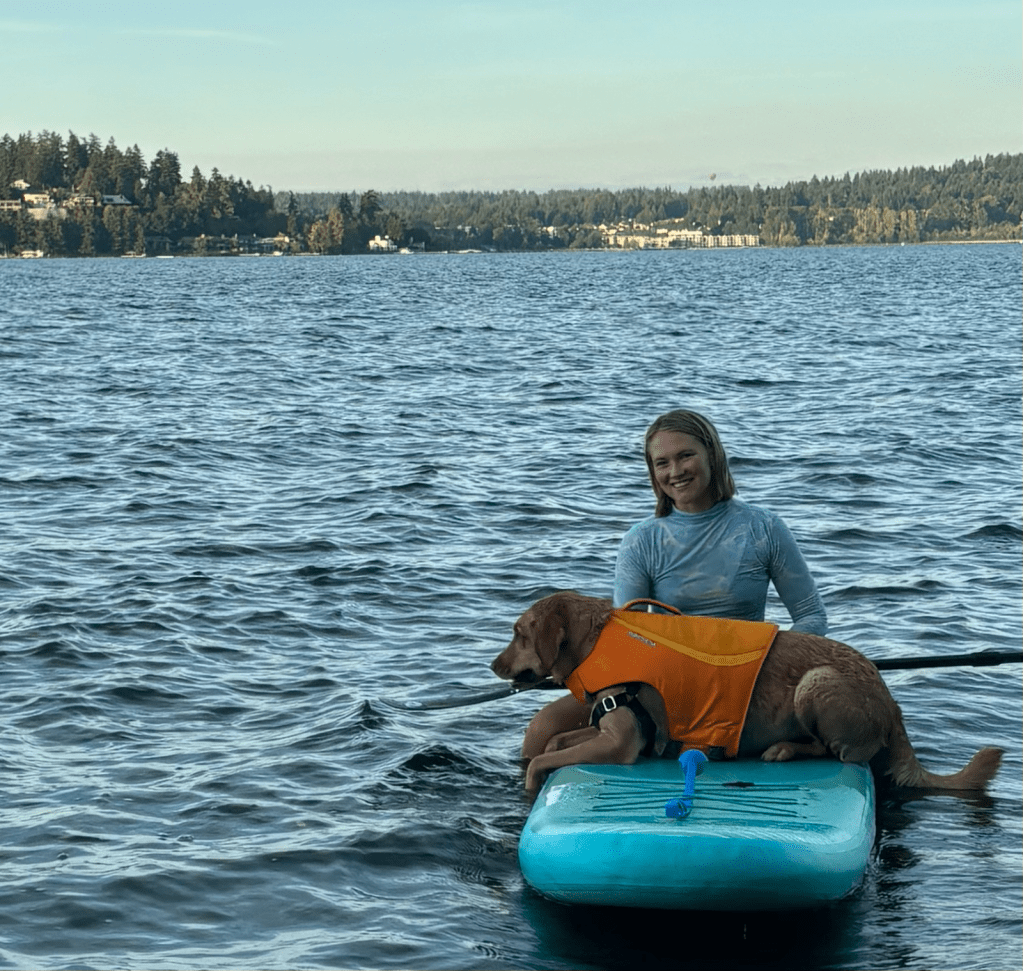
Over the summer, Amie attempted a summit of Mount Rainier, a story you can read more about in her recently published Currents article. Following her mountaineering adventures, she continued her independent studies with the IUCN’s World Commission on Protected Areas’ Urban Conservation Strategies Specialist Group, contributing to a paper proposing a new Urban Protected Area category that will be presented at the World Conservation Congress and published in Parks Journal. Amie finished out her summer working with Defenders of Wildlife, writing comments on Oregon’s Department of Fish and Wildlife’s new Southern Resident Orca Endangered Species Management Plan. When Amie was not busy with work, she and her pup, George, explored the green spaces of Seattle and worked on perfecting George’s paddleboarding technique.
 Currents