Written by Anna Lewis
Technology in today’s world has wiggled itself into every facet of life. Each morning, lights flick on, phones buzz, computers whirl, wireless earbuds get stuffed into ears, and cars start. However, minimal thought is put into how all of these devices came into existence. For instance, without lithium, copper, cobalt, graphite, rare earth elements, and many other components, electric vehicles would be unable to charge, wind turbines would not spin, solar panels would lose their ability to capture light, and smartphones would cease to exist. On a much more invisible level, without miles of copper cabling underground and fiber-optic lines laid down on the sea floor, electricity would not flow from building to building and the internet would be unable to keep everyone connected. Each of these technologies rely on “critical minerals,” which are defined as minerals considered essential to the national security of a nation, that have vulnerable supply chains, and are crucial to the production of products (like electric car batteries and cellphones). The catch is that securing the minerals needed to support humanity’s growing appetite for new technologies and green energy will require expanded mining worldwide.
Currently, mineral reserves and production capacity are highly concentrated in China, which is pushing many nations to invest in alternative sources for critical minerals and alternative means of refining them. As nations look to pull away from China, the greatest challenges will be addressing who is impacted and how the environment is harmed by opening new mines.
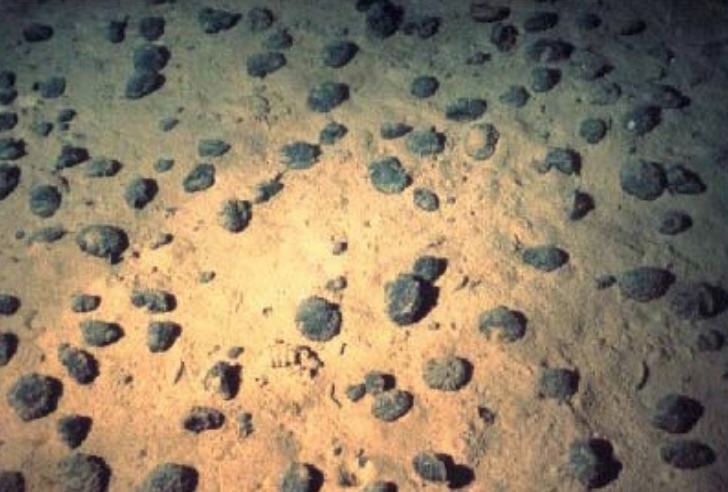
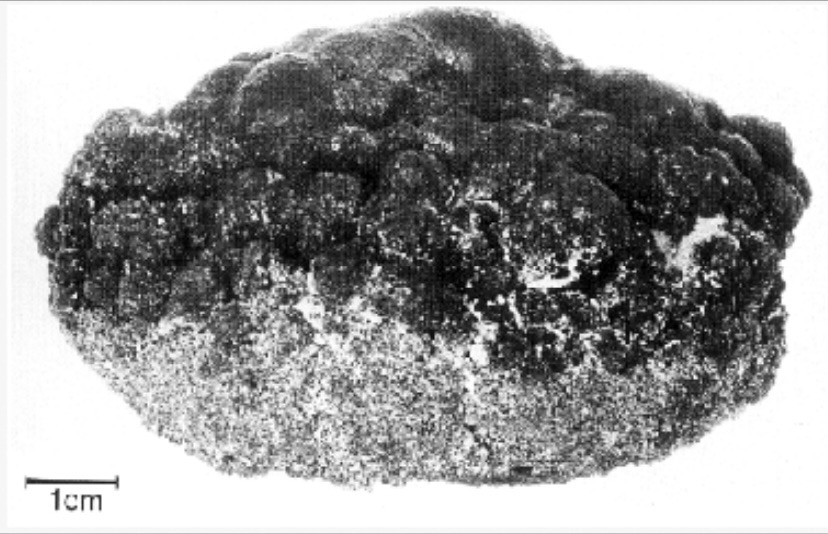
Deep sea mining presents a possible alternative to land-based mining as mineral-rich rocks, known as polymetallic nodules, have been found on the ocean floor. These nodules are packed with critical minerals including copper, cobalt, nickel, and manganese. Over millions of years, sand and metal-rich elements have drifted to the seabed and attached to objects like small fossils or shark teeth, forming thousands of fist-sized nodules over time. In fact, the United States Geological Survey estimates that a single region of the Pacific contains twenty-one billion tons of these nodules, more than any one area on land. For many professionals in the mining industry, this “completely untapped” resource is a home run for many reasons. Gerrard Barron, the CEO of Canadian mining company “The Metals Company”, advertises deep sea mining as extraction that is “gentler on the planet” with “no rainforests uprooted, no child labor, and no toxic tailings poisoning rivers.” All of which have become the hallmarks of terrestrial mineral mining. He argues that these minerals are needed for green energy and technology that will help the planet. “I want to save the oceans,” he says, “but I also want to save the planet.” However, few people outside of the mining industry are convinced that this is the case.
The intense criticism arising from the proposition of seabed mining exists for many reasons. For one, not much is understood about the potential impacts of large scale operations. University of California’s Marine scientist, Diva Amon, says that deep sea mining “has the potential to transform the oceans, and not for the better.” She believes, as do many other scientists, that deep sea mining could destroy many parts of the planet and its species before they’re even known to exist. What is known about the deep seas is incomplete and research is incredibly expensive to carry out in such remote areas. Thus, evidence-based recommendations on deep sea mining impacts are currently impossible.
Evidence-based recommendations on deep sea mining environmental impacts are currently impossible
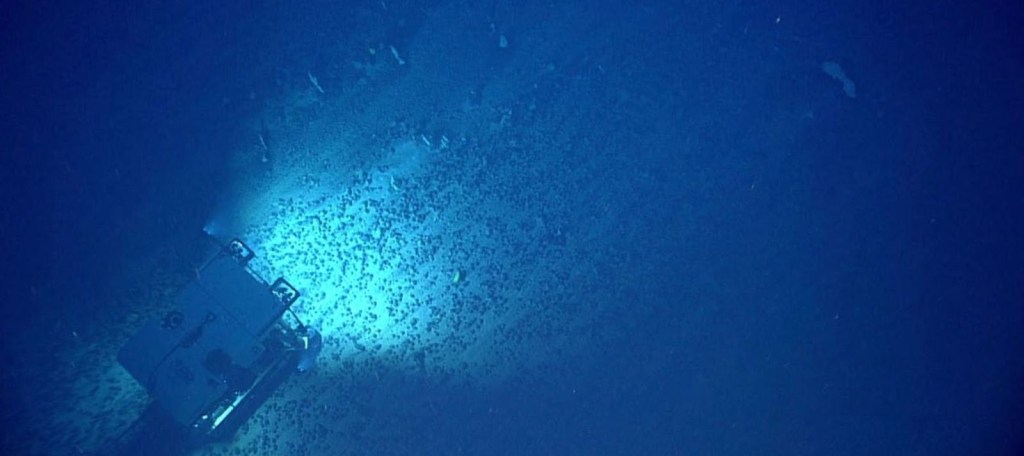
What is known about the impacts of giant machines scraping up the seafloor is that the organisms living on nodules, on the seafloor, and in the water above it, would be irrevocably harmed. Organisms like anemones, squidworms, class sponges, octopuses, corals, and nematodes would lose their habitats. The dust generated from the disturbance and upkick of silt would be the human equivalent of breathing in wildfire smoke. Not to mention the sound generated from the underwater machines could also be detrimental to creatures that use echolocation to survive.
Geologist John L. Mero, who published The Mineral Resources of the Sea in 1964, argues that mining polymetallic nodules could benefit many by nullifying “one of the historic causes of war between nations” by supplying desired resources for ever-expanding populations. However, he also cautions against sea mining, explaining that on the other hand, it could increase tension and conflict between nations by “fomenting inane squabbles over who owns which areas of the ocean floor.”
These squabbles are already experienced within the International Seabed Authority (ISA), the organization responsible for “protecting the ocean floor while organizing its commercial exploitation.” The United Nations Convention on the Law of the Seas (UNCLOS) established the ISA and gave it the power to pass regulations on how to manage the ocean’s mineral resources. To date, it has yet to agree upon any such regulations for deep sea mining, preventing companies from executing full-scale projects. The ISA does, however, issue exploration licenses which allow companies to explore and reserve specific areas of the sea floor for commercial use, should regulations be agreed upon. However, paragraph 15 of the UNCLOS states that after a company and/or nation notifies the ISA, the ISA has two years to formally adopt regulations. If the two year clock hits zero, the company is allowed to take the organization’s silence as an answer to move forward. So far, over 20 nations have secured exploration permits largely in the area between Mexico and Hawaii known as the Clarion-Clipperton Zone.
It is important to note that regardless of whether the ISA reaches a consensus on seabed mining, nations can decide to mine within their 200 nautical mile exclusive economic zone (EEZ). As of 2024, multiple countries have begun exploring their own waters including Sweden, Norway, Chile, Saudi Arabia, Brazil, South Africa, Namibia, Japan, China, and the United States.
It is now more important than ever to decide whether deep sea mining is worth the potential cost of harming the oceans that sustain life on earth.
It is now more important than ever to decide whether deep sea mining is worth the potential cost of harming the oceans that sustain life on earth. There is little doubt that whatever extraction takes place in the coming years, by land or by sea, will cause destruction with impacts that reach decades into the future. If achieving sustainable green energy is the goal, it is crucial to consider the various ways this goal can be achieved with the least amount of damage. At the end of the day, ripping up the Earth in order to save it might not result in the ideal future intended.
 Currents