Written by Bella Brandes
From its early beginnings as a cultural practice and way of life in Hawai‘i, surfing has been inextricably linked with activism. Known as he’e nalu, or “wave sliding,” the sport reflected the culture’s view of connection with nature. Respect and humility were tantamount. However, with the arrival of white settlers in the early eighteenth century came a centuries-long erasure of the practice and its people. By the mid-nineteenth century, surfing was banned by missionaries as a way to repress Hawaiian culture. Soon, a double standard emerged as descendants of these missionaries began to fetishize and commoditize the sport and those Hawaiians who practiced it as “experiential commodities.” In the late nineteenth century, and in response to this cultural repression, it was King David Kalākaua who revived many important indigenous practices like surfing and hula. His message rang of empowerment and sovereignty. Since then, Hawaiian surfers have embodied this generational resistance to colonization and cultural reclamation through the art of surfing. More broadly, a lot of surf activism through the ages has been built from communities experiencing the same kinds of injustices. Those communities are taking a stand not just against the symptoms of environmental degradation, but against their oppressive root causes, demonstrating to the world what it means to be a surfer.
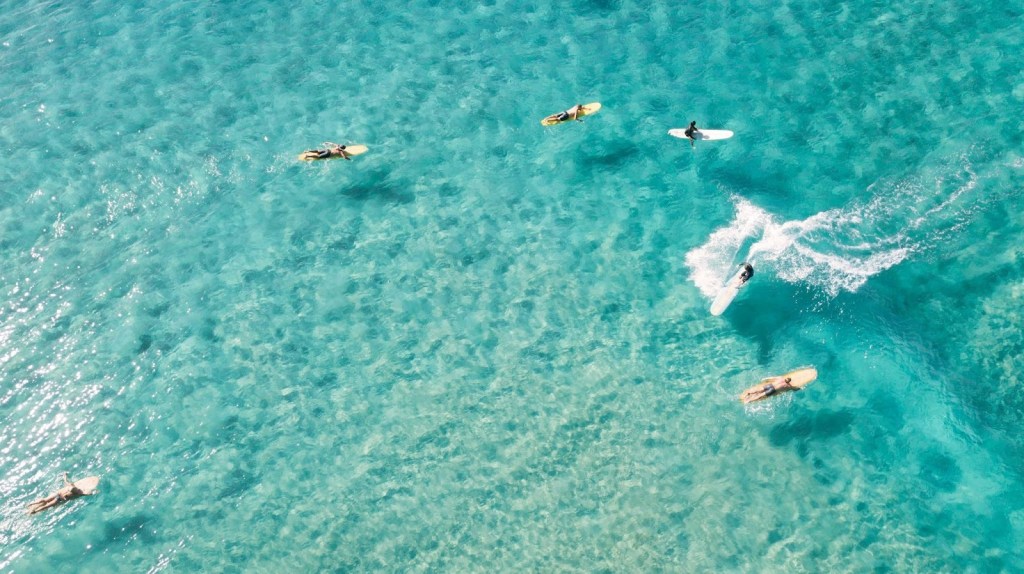
In the United States, surfing first gained its foothold along the beaches of Santa Cruz, California in the late nineteenth century. The sport was introduced by the nephews of Queen Kapiolani, who could often be seen riding their redwood Olo surfboards at the mouth of the San Lorenzo River. Other surfing figures like Hawai‘i’s own George Freeth were influential in spreading the sports influence into the early twentieth century. Those who could brave the cold Californian waters on traditional 16-foot Olos took up the sport in earnest. With time came innovations like the surfboard fin and the wetsuit, but the sport still remained a niche in the general populus. It wasn’t until the post-war boom of the late ‘60’s that surfing in the U.S. really became a beacon of countercultural values. Its alluring ethos catered to outsiders ready to buck capitalist comfort for simple living shaped by nature. Along with this came the blissful, if not ironic, denial of surfing’s oppressive history.
In time, surf culture began to appeal not just to the youth of the time, fed up with consumerism and the U.S. war machine, but also to corporate America. Big surf brands like Billabong, Quicksilver, and Rip Curl entered the space and Hollywood began to cash in on the exciting new craze. Movies like Bruce Brown’s The Endless Summer brought surfing into the public eye and popularized not just the sport, but the carefree, rebellious lifestyle. Gone were the days of surfing at the fringes of society. In its wake were corporate sponsorships with ads in Times Square, chasing remote waves halfway across the world, and the latest and greatest in mass-produced surf gear. Many see the ‘90’s and 2000’s as the height of what came to be known as “corporate surfing,” where the popularity of the sport exploded, and big name surfers like Kelly Slater, Andy Irons, and Mick Fanning became household names.
However, with the widespread appeal of surfing culture in the U.S. and abroad, came the significant environmental and eco-tourism footprint. Small towns harboring “discovered” waves started becoming overwhelmed with neocolonialistic surf tourism that left little in return for the local communities. This practice, just as it played out in Hawai‘i, left towns in places like Bali and Senegal battling environmental degradation and cultural extraction. With the increased demand for new surfboard shapes and the latest wetsuit technology came a rise in fossil-fuel based plastic manufacturing to support the burgeoning industry. Surf-based consumerism had reached its peak.
Of course, surfing still represented a sacred cultural practice for many, and one that was shaped by a deep reverence for the ocean. So below the flashy surface of sponsorships, surf trips, and new gear at the fingertips, the sport grew its rebellious side. On the tails of the environmental movement of the ‘60s, surfing activism began mounting. Surfers in Australia fought against sand mining and coastal development on their shores in the ‘70’s. From the South Pacific came a rallying cry against French nuclear tests in the ‘90s. Non-profits like the Surfrider Foundation formed in similar fashion as a response to pollution and development that were affecting the surfing community of Malibu in the late ‘80’s. Started by a group of local surfers, this grassroots organization got the public involved in organized meetings to fight the expansion of coastal infrastructure. Eventually, in response to the political pressure from the town, the state accepted Surfrider’s alternate solution to protect the wave and the surrounding environment. Surfrider CEO Chad Nelsen remarks, “It was about surfers having a voice in decision-making when they historically hadn’t.”
Surfrider CEO Chad Nelsen remarks, “It was about surfers having a voice in decision-making when they historically hadn’t.”
This voice would go on to build many other environmental movements across the globe with surfers at the helm. Surfers for Climate began from the inspiration Australian surfers Johnny Abegg and Belinda Baggs felt after attending a Great Barrier Reef climate summit in 2019. Coalescing around the chronic sewage pollution of the 90’s, surfers in Cornwall built a movement around cleaner seas for all, aptly known as Surfers Against Sewage. The nonprofit went on to create the nation’s first ever app monitoring sewage discharges and water quality. In 2014, Marc Chavez launched his initiative Native like Water to rebuild the sacred indigenous connection with water in youth communities from Hawai‘i to Alaska. The organization provides holistic health and education programs, including cultural practices like surfing, to build the next generation of well-rounded and culturally-grounded leaders. Finally, Will Henry started Save the Waves coalition as a fight to protect a storied break in Madeira from construction of a pier in 2009. Now an international non-profit, they run programs around the world designating whole surfing reserves for biodiversity conservation. These are just a few examples of surfers getting active and using their voices to better their communities.
Today we see these passionate wave riders leading many environmental movements around the world, which begs the question–why surfers? The answer lies in the deep and intimate connection that surfers have with the ocean. By returning to the ocean day in and day out, we bear witness to its changes. For us surfers, it’s personal, and action becomes inevitable. Surfing is an exercise in community-building. Surfing communities are diverse, coming from all walks of life, and bringing many skills of activism to the table. We are all connected by our communal sense of purpose in protecting fragile ecosystems, and with over 75% of surf breaks located in highly biodiverse ecosystems, there’s a lot to protect.
By returning to the ocean day in and day out, we bear witness to its changes. For us surfers, it’s personal, and action becomes inevitable. Surfing is an exercise in community-building.
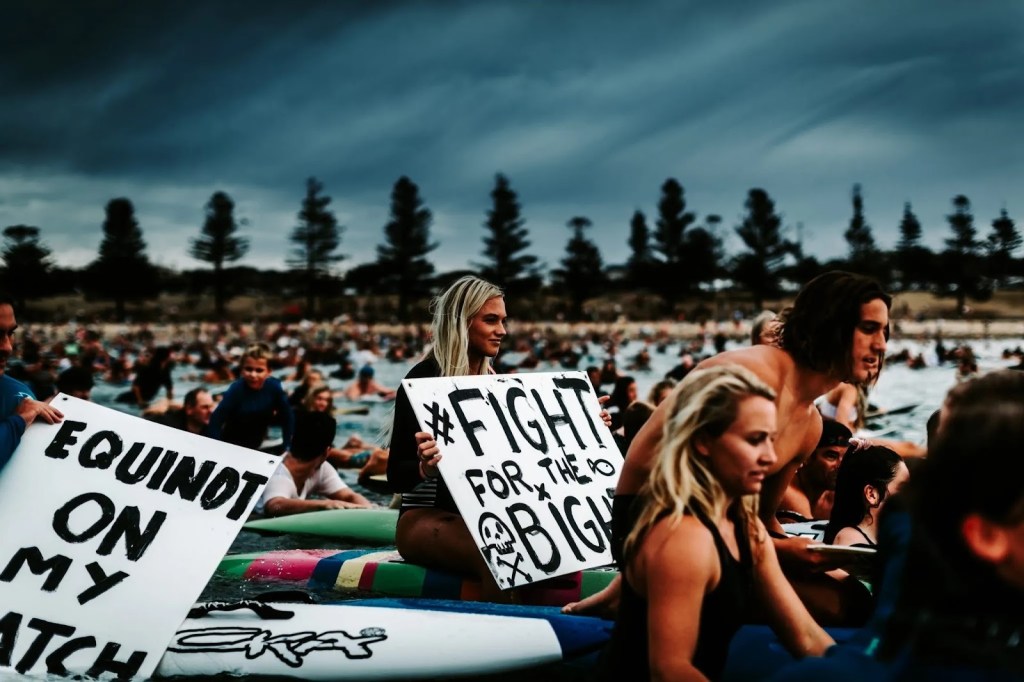
The Great Australian Bight is a 1,031 mile stretch of pristine coastline, rich in biodiversity and legendary waves. “The Bight,” as the locals call it, is a remote breeding ground for many migratory species, with over eighty-five percent of species endemic to this part of the world. An oil spill here would be an ecological catastrophe to the region. That’s why when Norwegian oil giant Equinor showed interest in drilling its waters, surfers and their communities led one of the most famous conservation movements in the world: Fight for the Bight. The crusade to get big oil out of town included many protest paddle-outs, 31,000+ public complaints to the industry regulator, and a global social media campaign, all culminating in a National Day of Action, the likes of which this surfing mecca had never seen. All in all, more than 10,000 people in 60 surf towns paddled out that day, as countless others protested from the beaches. The outcome? In February of 2020, Equinor abandoned its plans in The Bight and walked away from any drilling in the area. This movement was a massive success not just because this cherished landscape would be safe from oil drilling for now, but because of the diversity of people involved. Surfers, local communities, fishermen, scientists, and folks from around the world came together with one collective voice to draw a line in the sand and say NOrway Equinor!
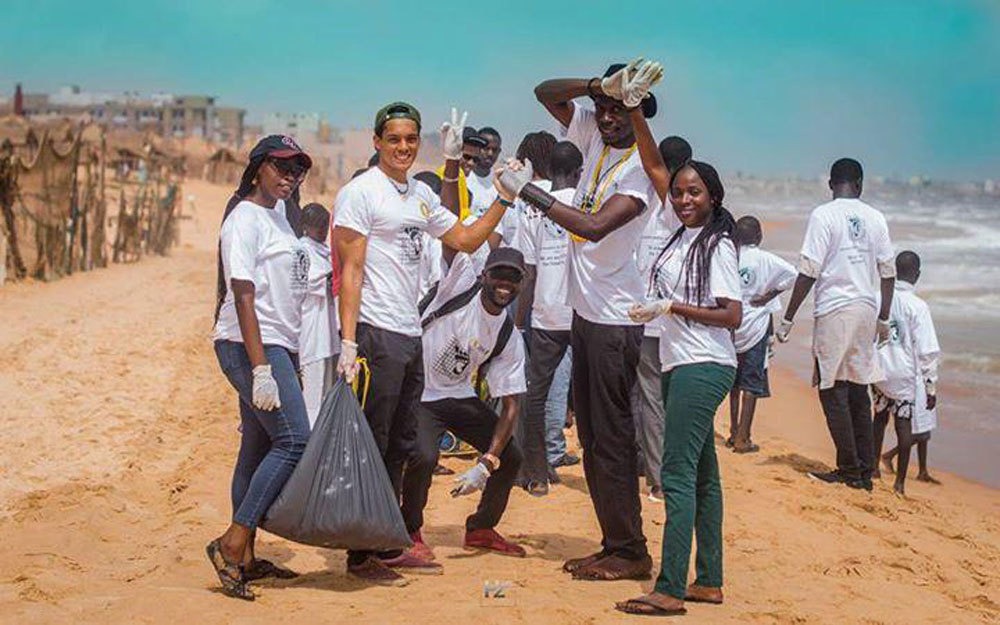
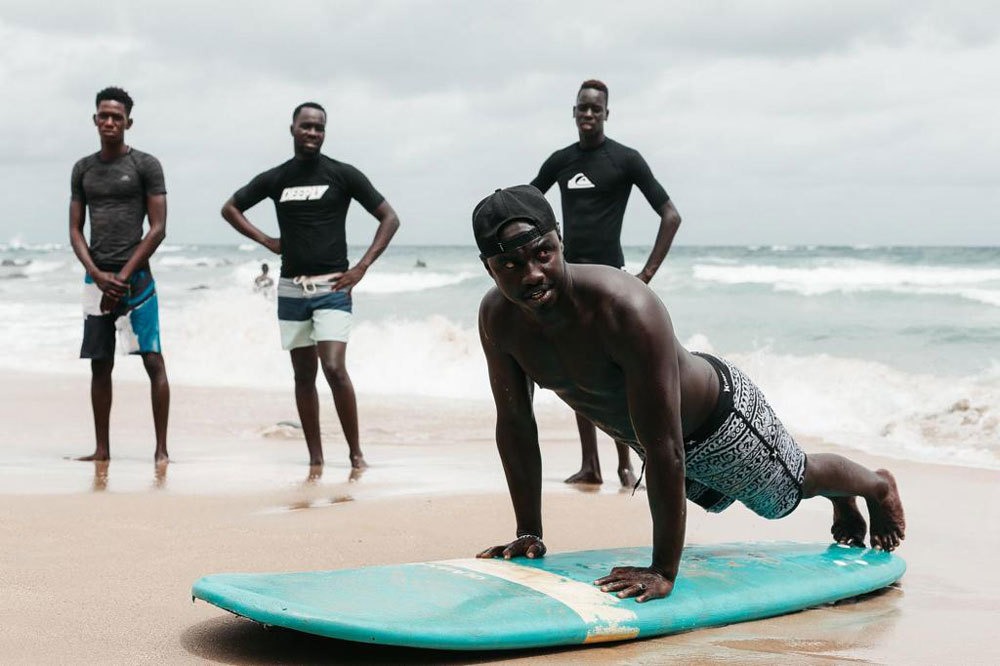
To see other parts of the world where surfers are proudly defending their beaches, look no further than Dakar, Senegal. Here, local surf legend Babacar Thiaw can be found cleaning up his local surf break of Virage. Back in 2020, “Bab’s” as he’s known in Virage, founded the Senegal chapter of the Surfrider Foundation as a way to protect his backyard break from the pressures of pervasive environmental and cultural threats like ocean plastic and extractive surf tourism. Since then, he has galvanized his community behind the same passion to protect. He organizes beach cleanups, produces conservation films, and runs surf camps for the local kids. He recently started a beach-side sustainability center with Senegal’s first ever zero-waste restaurant. Taking on the nation’s growing plastic crisis was no small feat, but for Babs, it was never a question. Reflecting the notion that change doesn’t just happen, Babacar asserts, “I see how much my environment has changed over the last decades and I don’t want to be part of the silent people, I am standing up loud and clear fighting to make a change and pass on a great legacy to my kids and community,”
“I see how much my environment has changed over the last decades and I don’t want to be part of the silent people, I am standing up loud and clear fighting to make a change and pass on a great legacy to my kids and community,” he reflects.
As plastic pollution plagues other countries like Indonesia, siblings Gary, Kelly, and Sam Bencheghib have the same drive as Babs to make a difference. The Bencheghib’s remember growing up along the beaches of Seminyak, Bali, and surfing amongst the plastic ridden waves at Batu Bolong. Partially due to the onslaught of surf tourism, Bali has long suffered from significant plastic pollution plaguing their waterways. In 2020, the Bencheghib siblings founded the non-profit Sungai Watch to tackle this problem close to the source: in rivers. Cut to six years later, and this passion project has turned into a 150+ member team of locals and volunteers installing river barriers, operating a collection and sorting system, and running a design studio that upcycles the waste into furniture–Sungai Design. The organization so far has collected over 5-million pounds of plastic in Bali’s rivers, and they’re looking to scale their operation to the rivers of Java and other polluted waterways around Indonesia. Just as these siblings reclaim plastic bottles into lounge chairs, so too has their organization reimagined Bali’s future for its people.
While surfing and spending time in the ocean provides many with a deep and enduring satisfaction, for some it awakens a desire to act and to protect. From Native Hawaiians who have carried its message of empowerment and sovereignty, to small surf communities taking action against extractive energy and pollution, surfing has been a medium of change for those brave enough to heed its call. What is it about the act of catching a wave, or having a conversation with your friend at the lineup, that overtime instills a sense of responsibility for these fragile ecosystems and the communities reliant on them? Perhaps it is the wisdom of the ocean that teaches us we must stand for what we surf on.
 Currents