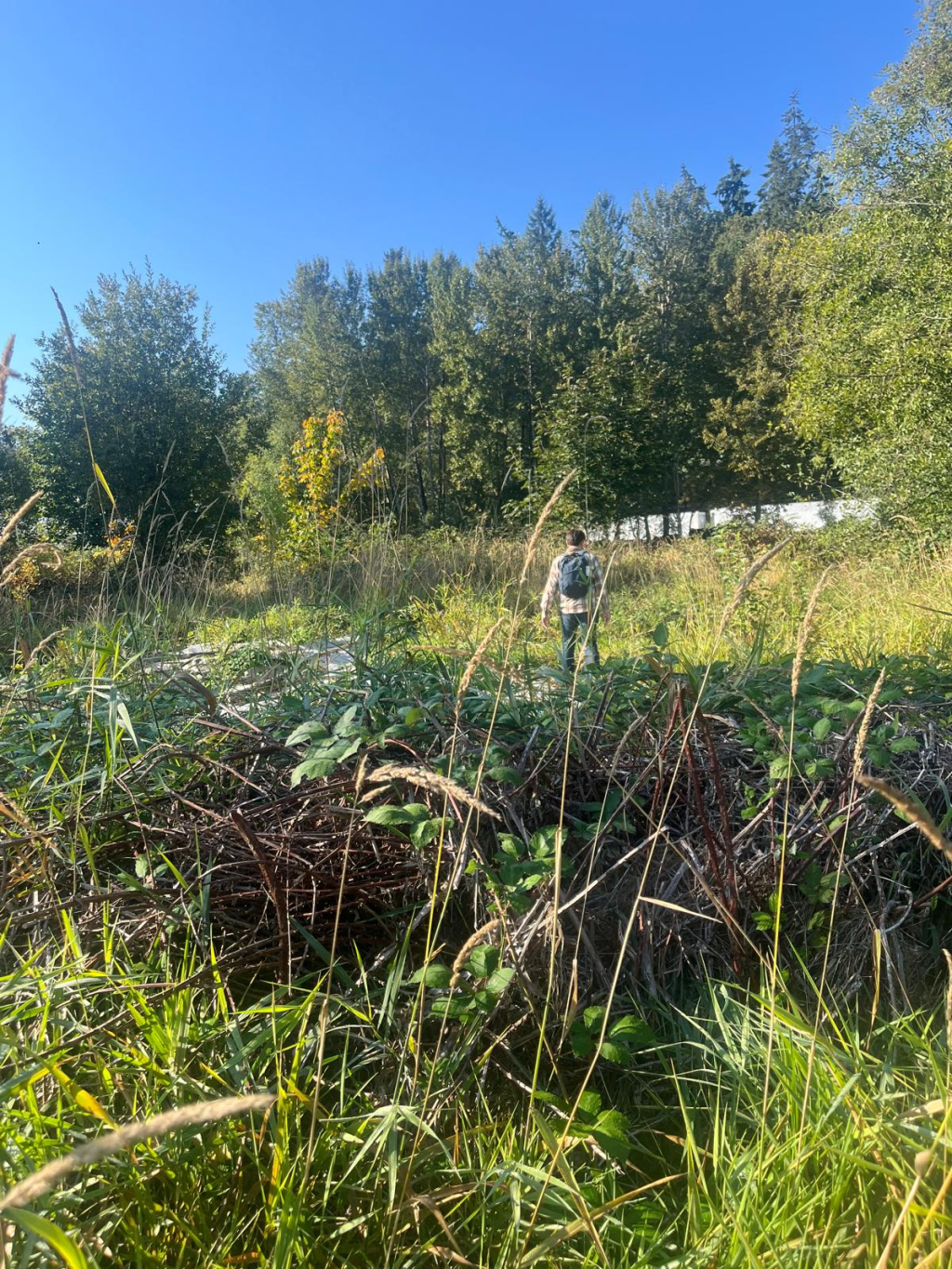
Written by Zoe DeGrande
Where I Started
As long as I can remember, my teachers, parents, mentors, bosses and generally anyone senior to me have always dished out a chagrined apology along the lines of: “I’m sorry we messed up the world; it’s your generation’s job to fix it”. My generation was handed this simple imperative: “fix it”. Fix the planet, fix the politics, fix the broken system, fix it all. This simple phrase, “fix it”, comes with an immense delegation of responsibility that feels too great to shoulder.
Gen Z is one of the most politically engaged generations; there’s always a cause to fight for. Fierce advocates are everywhere—I often felt that if I wasn’t engaging in Greta Thunberg-levels of advocacy and awareness at all times, then my life, career, and values were endangered-paper-tigers disintegrating from the hole in the ozone layer. This is a common sentiment among many of my peers—we often bond over a shared lack of a specific purpose. Mostly, we feel that we are only ambling in the direction of a job that will “get us there”, without being truly able to articulate where there is.
Trying to find the right place and position to effect change drove me to curate an obnoxiously long resume: environmental consulting, park rangering and weed retailing in Colorado, environmental compliance and waitressing in Nebraska, data collection in Massachusetts, Peace Corps in Panama, deckhanding along the Mississippi and Ohio Rivers and East Coast— all for a period of a year or less. I am a perfect candidate for the “Jack of all trades, Master of none” position. I figured with all my moving something would eventually click. I liked the places and people but always felt there was something missing, a feeling that something was astray, a connection or idea I still had to find. Grad school was the big move to finally find the missing link.
I came to Washington expecting it to be another pit stop on my wandering journey to find a place that felt like there. But given the opportunity to sit in one place for two years I learned that if you look around for a while, more closely and intently, you can find a lot to do in a place. If you stay put long enough, you can start to see humanity’s history of social, political, and ecological muck seep into the foreground. You also begin to see the little things you can start doing to help make improvements. This led me to a new perspective. Instead of asking “how do I get there?”, I began to ask “what can I do right here?” Maybe not right here, but close to here, in Puyallup, Washington. Where I began my master’s project, a collaboration with indigenous staff and students at the Puyallup Tribe’s Chief Leschi Schools (CLS).
Social scientist and cultural geographer Doreen Massey suggests that “place” is not a fixed backdrop against which life simply unfolds. Instead, it is something alive, produced through the relations and connections of colliding political and social currents, both globally and locally (“glocally”, if you will) composed from the skein of space-time. Basically, and most importantly, Place is always under construction [1]. This was something I had never thought deeply about until starting the project at Chief Leschi Schools.
The Place
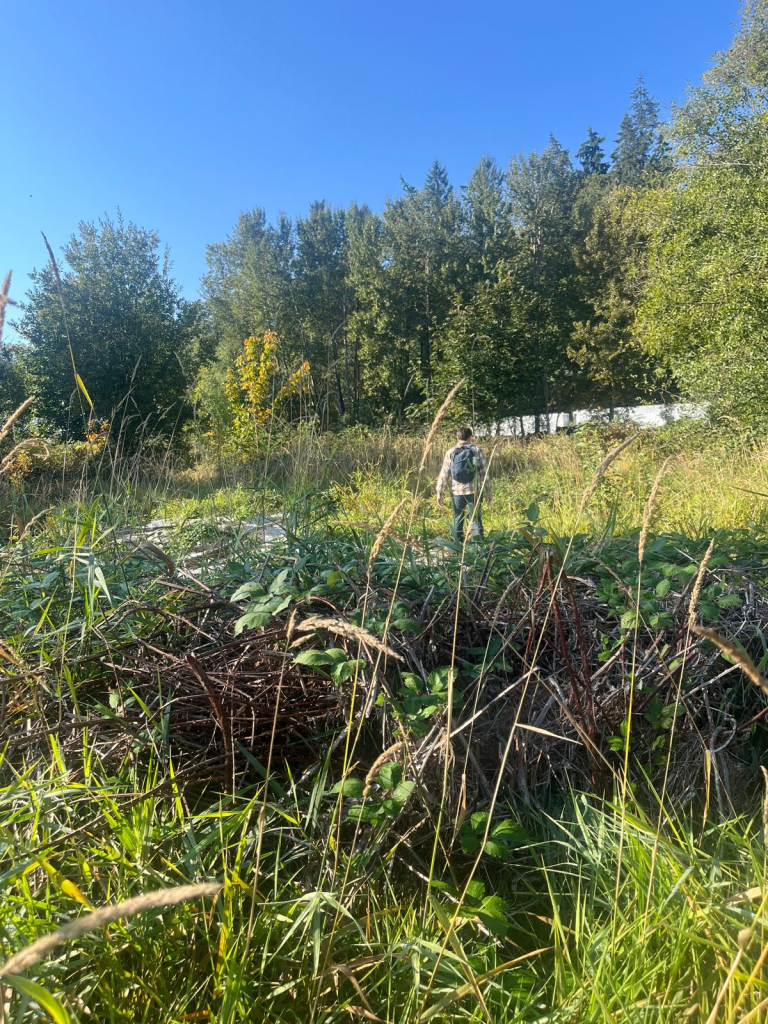
On the campus of CLS is a plot of land that through time has become a reflection of harm by settlers. The landscape of Dorian Gray reminds you how far this place is from itself. On this land, invasive Himalayan blackberries perforate the soil’s surface, choking out the natives like selfheal and sword ferns. Lake Leschi (named for the Nisqually Chief who fought for the dignity and rights of his people after his name was forged on the Medicine Creek Treaty) blooms into a nitrogen-fueled carpet of algae. A train regularly cuts across the salmon-bearing creek, broadcasting its comings and goings to CLS students every class period.
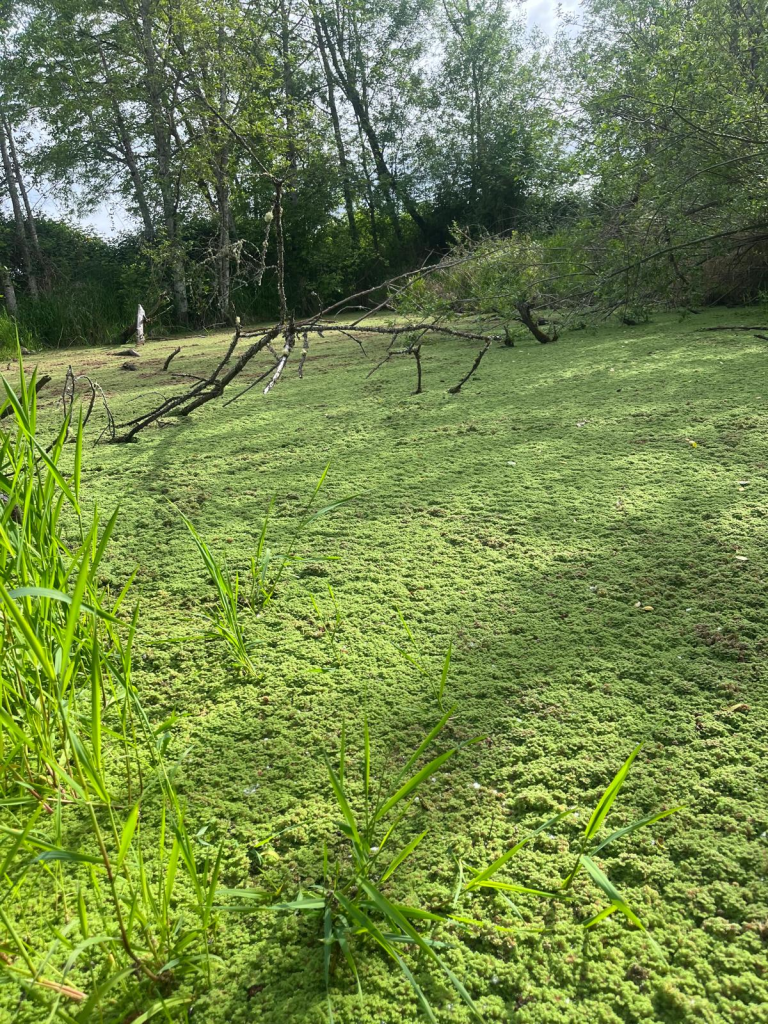
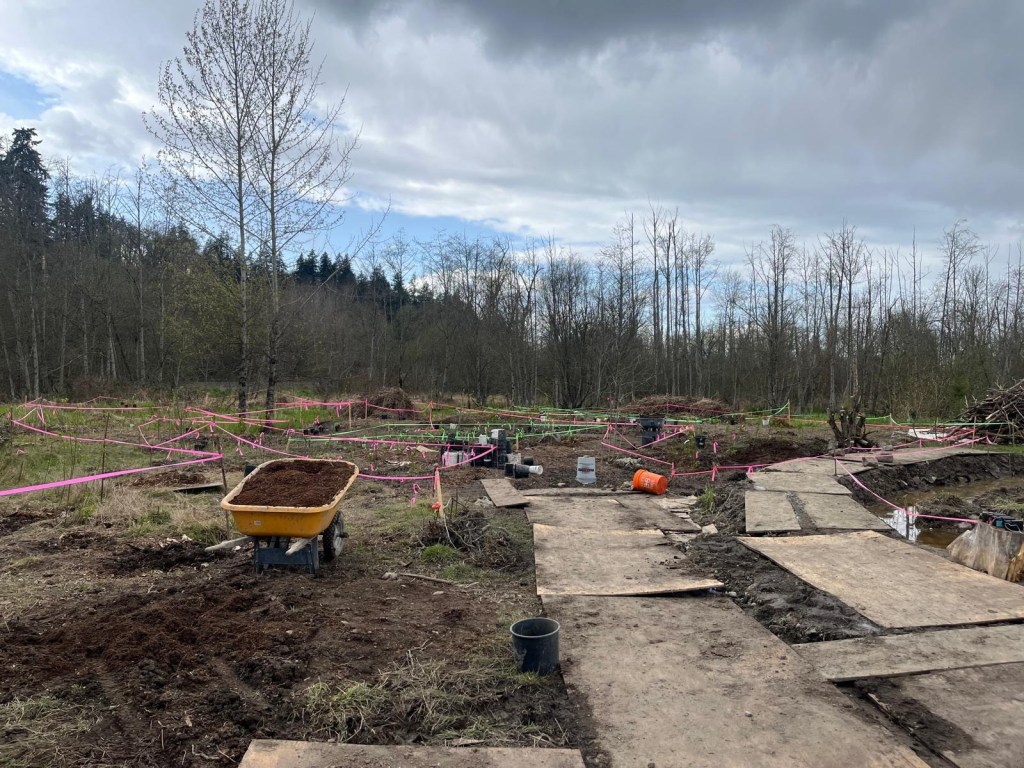
Transforming this landscape into a traditional Food Forest became the focus of the project, which aimed to remove all the invasive plants in order to bring back traditional-native plants and foods to expand the outdoor classroom at CLS.
This idea was in motion long before my project partner and I came along. When we joined, the bulk of the manual labor to transform the space from blackberry walls to a meandering garden was already underway. We helped de-weed and prep for the official groundbreaking ceremony, but once that was over, what else was there to do besides general upkeep? I was unsure of what new element we could bring to this project. For the time being, we kept ripping out blackberries, planting, and visiting classes—just being there.
“Things change. Nowadays it’s impossible to hold on to the purest form of tradition or the old ways. Sometimes the best you can do is keep what you can, blend it with some new and go forward.”
One day after the last CLS bell rang, Sway-la, the then-Culture teacher, caught up with us on his way out–we chatted about the progress of the Food Forest and the nice weather. He began talking about how the food forest was an opportunity to blend new ways of teaching with traditional knowledge. What he said stuck with me: “Things change. Nowadays it’s impossible to hold on to the purest form of tradition or the old ways. Sometimes the best you can do is keep what you can, blend it with some new and go forward.”
It was in the stretch between planting and pulling blackberry hearts from the soil that we began connecting more deeply with CLS teachers and students, by sitting in on classes like Indigenous Woodworking or Fishery Sciences. I kept hearing the phrase “since time immemorial” spoken almost like a prefix to whatever followed: “Since time immemorial, we have harvested a great cedar for the Canoe Journey,” or “Since time immemorial, we have sung this song.” I had heard the phrase often since moving to Washington, but in that context it began to sound like, as long as we have known and belonged to this place.
It made me think of the small plot of land between the train tracks and the school we had all been working on: Though we had come together to give the land a clean(ish) slate, there was still so much work to do before it could carry the weight of “since time immemorial.”
The middle school science teacher, Mr. LaPlant, once asked his class:
“Why is it important to make sure native species are here? Why is it important to keep Himalayan blackberries away… Sometimes people say, ‘Himalayan blackberries are bad!’ They are disruptive; they disrupt the order of things, and that’s true. But they didn’t ask to be here—they were introduced. It’s also important to ask: how is the local environment adapting to these changes over time?”
The past blends with the present—lessons of history and ecology folded together.
At first glance, it looks like many other places: a train galloping in the background, a little algal bloom pond in the foreground and plants and animals that don’t necessarily belong, but have long since naturalized. None of these things can be “cured” or restored to a “pristine” or “untouched” condition. But it can be instructive. The past blends with the present—lessons of history and ecology folded together.
As we went along, more things started popping up in the Food Forest: small wooden signs with the plant’s name appeared under the leaves, colorfully painted rocks scattered like easter eggs. Some of these things we helped with, but others remain a happy little mystery.
Now, the broadcasting and Lushootseed classes have started making short videos in Lushootseed–the Puyallup language–identifying the plants and their names. You can feel the Food Forest growing into itself, more than a plot of land festering from the wounds of time, awakening to its many roles as a classroom, teacher, cultural center—part of the CLS community.
Though the project may officially be concluding on our side, new collaborators continue to emerge. By staying just a little longer, I was able to watch the ripples of everyone’s work gather into waves. Once work or even thoughtful attention was directed toward the Food Forest, its energy extended beyond the UW–CLS collaboration.
Pierce County officials came to see what an intermingling of goals could look like. The Tacoma Tree Foundation, which was already connected through one of the STEM teachers, wanted to deepen its involvement. The Puyallup Tribe’s curriculum developer visited to explore how the Food Forest might hold more than science alone.
The work, then, was never just about building a Food Forest. It was about re-envisioning how the space could retake the narrative of the place it occupies and move beyond its current role as an outdoor science classroom and beyond the imprint of invasive species introduced through settler colonialism. In this slice of time the Food Forest is now better aligned with Chief Leschi Schools’ idea that says, “We respect where we come from and are ready to accept the challenges of our future.”
Though the Food Forest will never be restored to a pre-settler state of being, it now holds lessons learned and new stories that can continually serve CLS staff and students as an adaptive space. The Food Forest will always have its colonial era scar, but now it also bears the mark of every person who has spent time there. It isn’t perfect—and hopefully it never will be: always in the making, never truly finished.
Final Thought
After reflecting on my resume, I realized the irony: I have always been working with place. I collected seasonality data on flora and fauna along the East Coast, interpreted the geomorphological history of a park in Colorado, and ushered cruise guests to plantation and jazz tours along the Mississippi River. And yet, in each case, my engagement with place was only superficial. I never stayed long enough to become well acquainted with any of the histories, only a little slice in the present. But over the course of this project, being present in the past and building relationships with CLS staff and students taught me that you don’t have to cross borders to find a cause nor be an expert on all things to lend a hand. As spiritual teacher and psychologist Ram Dass writes, “First lesson for me: you do what’s in front of you, you start where you are.”
References
[1] Massey, Doreen. “Politics, Space/Time.” Space, Place and Gender, University of Minnesota Press, 1994, pp. 249-269.
 Currents