Written by Lia Minckler
Have you ever looked into the night sky and wondered how the stars shine so bright? Or thought about what keeps the sun beaming so steadily? The answer to that is nuclear energy—nuclear fusion to be exact. With energy so vast that it keeps the Earth warm from 90+ million miles away, the sun and stars inspired humans to harness this resource for ourselves. The path to taming nuclear energy for commercial use has been long, spanning multiple wars and a few disasters. Now, many consider nuclear energy to be safe, clean, and reliable. In the midst of a climate crisis and skyrocketing gas prices, we have the opportunity to meet rising energy demands in an affordable, sustainable way by going nuclear.
Energy demand continues to rise, especially with the exponentially increasing use of artificial intelligence (AI). In just one year, a single data center produces between 300,000 and 500,000 tons of carbon emissions annually. With AI looking like it’s here to stay, we have to find better ways to meet demand while reining in our emissions. The Nuclear Energy Institute estimates that American electricity demand will rise by almost 35% by 2050. Accommodating those needs using fossil fuels would further contribute to severe environmental degradation. Global temperatures would rise, species would lose their habitats, wildfires would increase, and the list continues. If giving up fossil fuels and converting to sustainable energy is the price to pay for preserving valuable ecosystems, I think it’s worth the cost.
If giving up fossil fuels and converting to sustainable energy is the price to pay for preserving valuable ecosystems, I think it’s worth the cost.
Over the past few decades, there has been a societal push to invest in renewable sources of energy and move away from fossil fuels. Some of the more popular alternative renewables, such as hydropower, wind, solar, and geothermal, are becoming more mainstream, but concerns over the consistency and reliability of these power sources are significant. Take Washington, for example, a state rich with water. The regular rainfall and vast rivers make the state a perfect spot for utilizing hydropower. Having proven its reliability, hydropower in Washington has become a predominant energy source, accounting for almost 60% of the state’s electricity net generation in 2024.
However, this once plentiful resource might be dwindling. Since 2023, Washington state has been in a drought. Even if it hasn’t been immediately evident, many Washingtonians have noticed the increasingly hot summers accompanied by observably less precipitation. So, what resource can supplement our energy needs if the rivers run dry? This consideration is valuable for places like eastern Washington, which is already quite dry, and other states that lack an abundance of natural resources. Solar and wind are options, but they still rely on temperamental Mother Nature. Nuclear energy would solve that problem; no more waiting around for the sun to shine, winds to blow, or rain to fall.
The nuclear industry is working hard on rebranding its image towards clean energy.
When people think about the word “nuclear”, they don’t immediately think about saving the planet. The concept carried many negative connotations, and for good reason. Its origins are rooted in mass destruction, having played a significant role in World War II and the Cold War. It has also caused a multitude of disastrous events, most notably the meltdowns in Chernobyl and Fukushima. There were anti-nuclear movements throughout the 60s and 70s because the public opposed its destructive nature. Today, the nuclear industry is working hard on rebranding its image towards clean energy, and I’m inclined to say it’s working.
How it works
Nuclear energy gets down to the very fiber of beings: atoms and nuclei. It’s accessible, strong, plentiful, and so, so small. First, we must understand what nuclear energy is and how it works. There are two different ways nuclear energy is formed: fission and fusion.
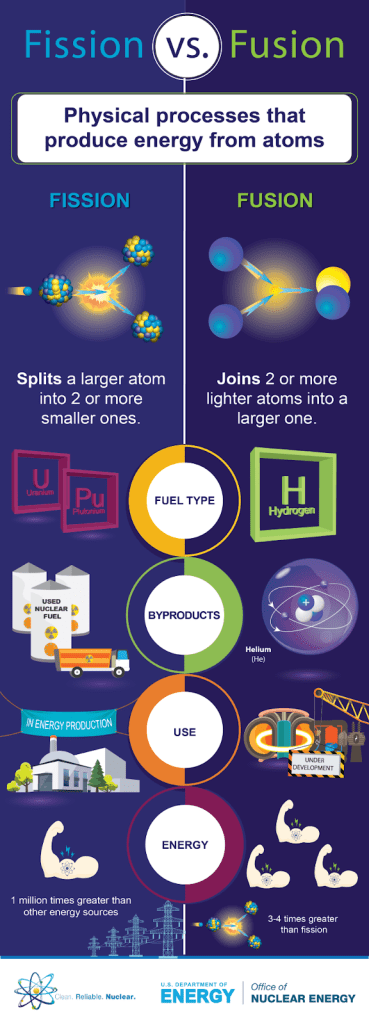
For an extended breakdown on the difference between fission and fusion, see this video from the U.S. Department of Energy.
Fusion, as evident by the name, is the process of combining two atoms together, creating a larger, heavier atom. This process results in a massive amount of energy, tripling or quadrupling the output from fission. Nuclear fusion is what enables the sun and stars to produce immense radiant energies, allowing humans to live on Earth, and providing a nice tan. But we have yet to reap the benefits from this kind of energy for electricity generation because it is genuinely too hot to handle. That’s not to say it won’t ever find a useful place in our day-to-day lives, given the right technological advancements.
Fission is the process of a neutron forcefully splitting a larger atom into two smaller atoms. This releases a tremendous amount of energy, which is processed through nuclear reactors that heat water, turning it into steam and sending it through turbines to make them spin. Fission uses heavier elements such as uranium or plutonium because the atoms are easier to split. This generates a chain reaction, as the atoms collide with others around it, enabling more energy to be produced. Fission is turned into electricity, making it more fruitful than fusion. The rest of this article will focus solely on the output from fission.
Despite the good publicity nuclear energy is generating, there are considerable cons accompanying the pros that need to be addressed.
The Advantages:
A prominent feature giving nuclear energy an edge is that it produces virtually no carbon emissions. While some emissions are still generated to mine the uranium, the operation and output from nuclear plants are about as emission-free as one can get. The benefits don’t stop at zero carbon emissions, as nuclear energy doesn’t produce any air pollutants, and thus doesn’t contribute to issues like acid rain or smog. For environmentalists whose bottom line is decreasing carbon emissions and improving air quality, this element of nuclear power is certainly a convincing component.
Since the amount of energy produced is so vast, this makes nuclear energy extremely reliable. The reactors themselves are very durable and have a lifespan of about 80 years. If a human and a nuclear power plant were born at the same time, that person could rely on said energy source for practically their entire life. Most nuclear plants in the U.S. have been retired not because of inefficiency or dilapidation, but poor market conditions. This shows that more investment and public support are needed if we want to keep the longevity of plants as high as their performance potential.
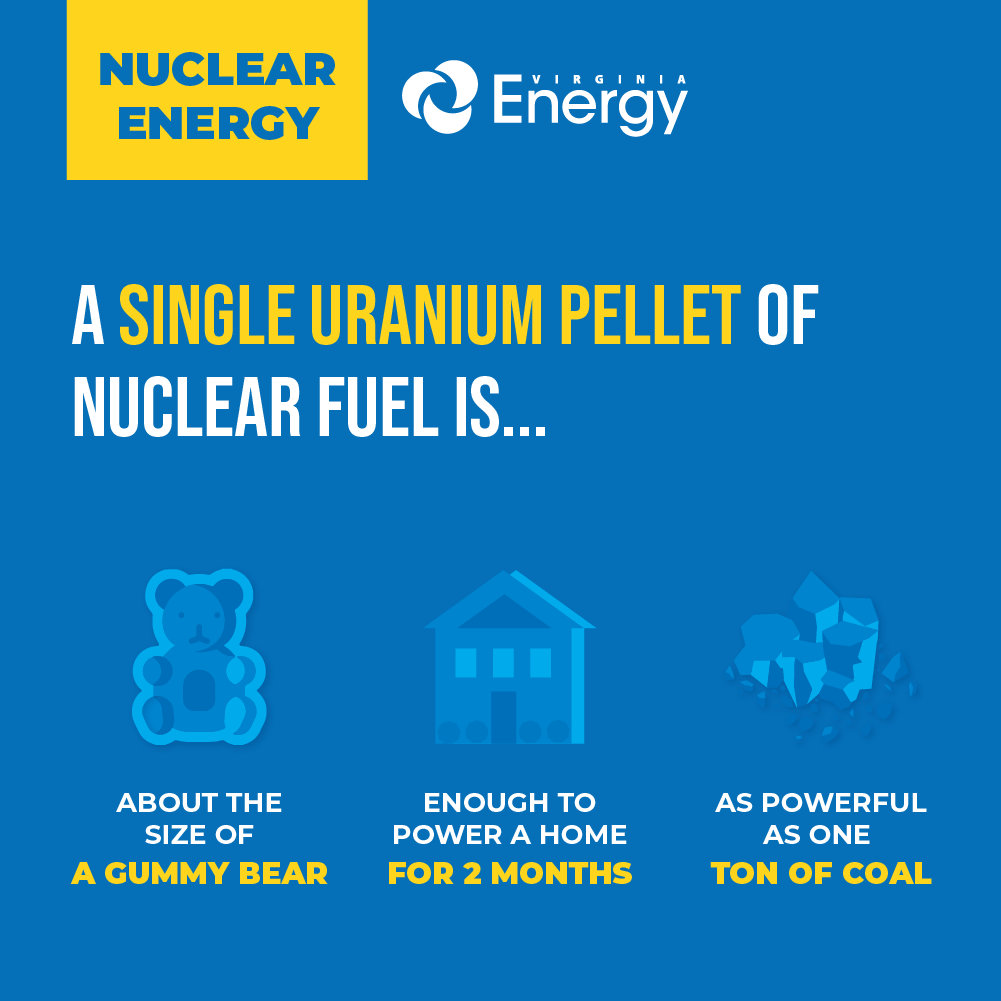
In conjunction with its strong endurance, nuclear energy is very powerful. A single nuclear reactor produces around one gigawatt of electricity every hour. In comparison, it would take two coal power plants, or four solar power plants, to produce the same amount of energy. The idiom “small but mighty” surely must have been coined with nuclear energy in mind. There’s no doubt that the amount of energy generated from this minute source makes nuclear energy stand out as a top powerful producer.
Nuclear energy is also cost-effective and bolsters societal improvements. It has the auspicious trait of not being subject to the volatility of fuel prices, which makes fossil fuels undesirable, nor does it have the expensive up-front cost of solar panel installation that homeowners have to bear. Because of its reliability, prices remain steady and predictable. Nuclear energy also creates thousands of stable, high-paying jobs that are viable for decades. The prospect of getting a job in the nuclear energy industry encourages people to pursue higher education and contribute to research in many different fields, such as engineering, manufacturing, mechanics, chemistry, and safety/environmental specialists. In my opinion, a vote for nuclear energy is a vote for a stronger, safer, and more ambitious community.
The Disadvantages:
Nuclear energy is notoriously dangerous. We cannot proceed without addressing the elephant (foot) in the room: the Chernobyl and Fukushima disasters.
On April 26, 1986, in Ukraine (the Soviet Union), the Chernobyl meltdown occurred as a result of a reactor design flaw and human error. 30 people died in the initial explosion, and later, 30 more onsite workers and people involved in the clean-up died from Acute Radiation Syndrome. Additionally, about 350,000 people needed to be rehomed to avoid the contaminated area. The surrounding land at the site will stay radioactive for centuries. This is probably the best-known event in the history of nuclear energy, and serves as a cautionary tale about the dangers of working with radioactive elements.
On March 11, 2011, the Fukushima Daiichi power plant in Japan was one of the many buildings hit by a major tsunami. The impact of the nearly 50-foot-tall wave rendered the safety systems inoperative. While Fukushima had no fatalities, there were many concerns about where contamination had spread and what was affected (adjacent land, seafood, and wastewater). The results of these events are lost loved ones and century-long damage to the ecosystems that reside in those contaminated areas. Even though this accident was less impactful than Chernobyl in terms of deaths and area of contamination, it’s a testament to how risky nuclear energy can be, especially in areas where natural disasters occur in relative frequency.
To have nuclear power at all, mining uranium is required. This is an arduous job and creates health problems for laborers and communities adjacent to the mines. The waste rock (excess mineral generated by extracting uranium from the ore) seeps into rivers and other local water sources, exposing groups —many of which are indigenous communities who regularly utilize said water— to heavy metals and toxic chemicals. This also has detrimental effects on the surrounding ecosystems and takes decades, even centuries, for water systems to recover. Many mines get abandoned, leaving the land ineffective. This process is an issue for both environmental justice and human health.
Another challenging byproduct of nuclear energy is the waste it produces. Not only is it radioactive for hundreds to thousands of years, but it’s also incredibly difficult to dispose of, requiring long-term storage and containment. This can be held in cooling facilities underwater or stored in dry, thick, lead containers typically placed underground. Despite the nuclear industry’s decades of development, a permanent disposal solution that is sustainable has yet to be found.
Moving forward with nuclear energy
Nuclear energy has improved immensely. So much so that the cons I addressed even have pros. The complications associated with nuclear energy shouldn’t be taken lightly, but they demonstrate how challenges can be overcome through innovation and enhanced safety measures when a resource is worthwhile to harness.
In Chernobyl, the president at the time, Gorbachev, attributed the accident to partially initiating the fall of the Soviet Union, and spurred cooperation between the East and West to improve safety measures. Now in the U.S., all reactors are built with containment mechanisms, and safety procedures are taken seriously to avoid any future meltdowns. Nuclear plants in areas with natural disasters are built to withstand any force majeure, and have procedures to shut down before an event hits, to avoid repeating what happened in Fukushima. It’s important to remember that throughout history, the number of fatalities from nuclear disasters is small when compared to the millions of silent deaths that the fossil fuel industry contributes to globally every year.
The number of fatalities from nuclear disasters is small when compared to the millions of silent deaths that the fossil fuel industry contributes to globally every year.
To supply a home with electricity for a year, some waste will be generated, but it’s small. About 90% of it gets treated and reused to restart the fission process, and the other 10% equates to just five grams of waste, weighing the same as a standard piece of paper. Let’s think about electricity generated from 1,000-megawatt sources and their waste. A nuclear station could sustain the electric power needs for more than a million people, resulting in just about three cubic meters of waste per year. In comparison, a coal-powered station would produce 25% less energy, and contribute 300,000 tons of ash and upwards of 6 million tons of carbon emissions. One method produces a small amount of waste that can be stored safely, while the other releases toxic chemicals that are breathed in daily and directly impact human health.
Nuclear technology once meant destruction and danger. It leaves behind a legacy of wars, weapons, and disasters. Entering a new civil stage, its most advantageous use would be power for the people. Rising energy demands will accompany more severe climate change problems if fossil fuels are used. We have the opportunity to utilize a source of clean, powerful, reliable, and inexpensive energy, which is becoming vastly more important in the wake of current economic inflation. While waste disposal, material sourcing, and the threat of accidents are conspicuous challenges, solving the problems of nuclear energy is certainly going to be easier than solving the entire dilemma of climate change.
 Currents