Written by Margaret Jelsma
What appeared to be competition between northern resident killer whales (Orcinus orca) and Pacific white-sided dolphins (Lagenorhynchus obliquidens) for increasingly scarce Chinook salmon may actually be an unexpected partnership between the two delphinid predators.
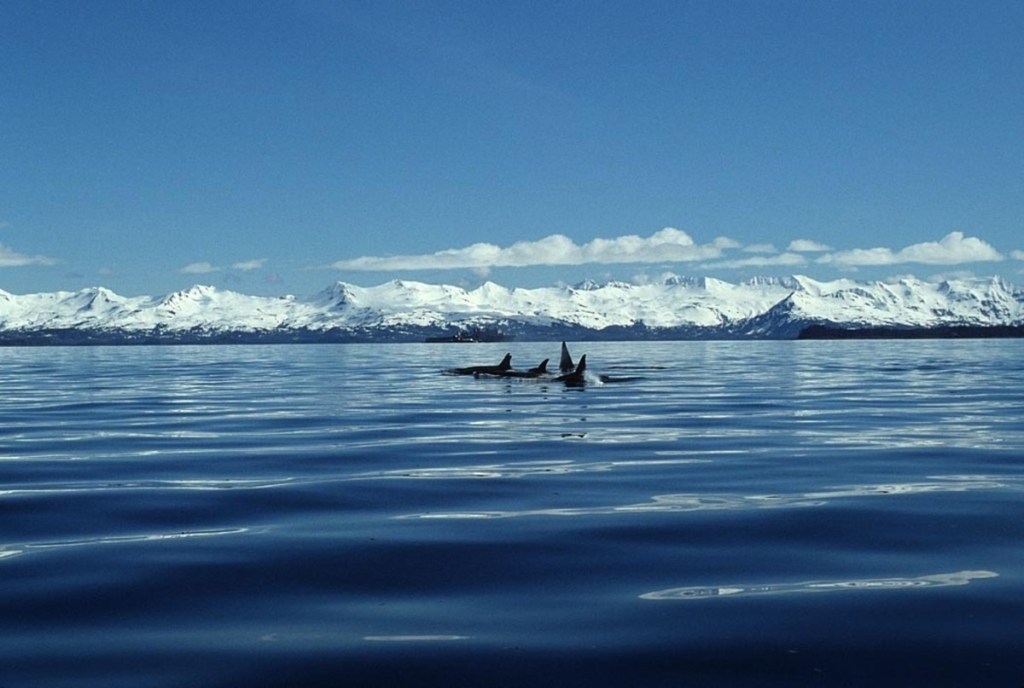
Cooperation can outweigh competition when it comes to catching salmon
Off the coast of British Columbia, these predators have been observed searching for and eating Chinook salmon together. Initially, these events were thought to be coincidences or the dolphins stealing scraps. In a recent study, scientists discovered that this coordination is actually an opportunistic hunting partnership.¹ The two species can be seen working together in a shared hunting sequence across the water column, suggesting that cooperation can outweigh competition when it comes to catching salmon.
One of the most compelling aspects of this hunting partnership is the role dolphins play during the search for salmon. Despite being apex predators, the northern residents don’t always lead—often, it’s the dolphins setting the pace. Pacific white-sided dolphins are fast, highly maneuverable predators, capable of sweeping large areas of the ocean in search of prey. They often move ahead of the northern residents, scanning for fish and guiding the direction of the search. As dolphins inspect for prey, they echolocate, producing a stream of acoustic information about their surroundings. The northern residents are thought to detect and interpret these signals, allowing them to effectively “eavesdrop” on the dolphins as they search for prey. Finding and catching salmon is no easy task in these waters. Chinook travel quickly through deep waters filled with underwater features like reefs, rocky ledges, and sharp drop-offs, where visibility is limited and prey can disappear just as quickly as it is found. Expanding the range of a hunt by incorporating another species may significantly increase the odds of success.
Northern residents, specialist predators of Chinook salmon, capture fish and bring them to the surface, where they’re torn into pieces while being consumed. Dolphins then move in to collect fragments of the salmon drifting in the water. For Pacific white-sided dolphins, access to large Chinook salmon would otherwise be limited. These dolphins typically target smaller prey that can be swallowed whole, and adult Chinook are often too large for them. The whales’ process effectively breaks down the otherwise inaccessible resource into one that dolphins can consume. What appears to be scraps is exactly what the dolphins need.
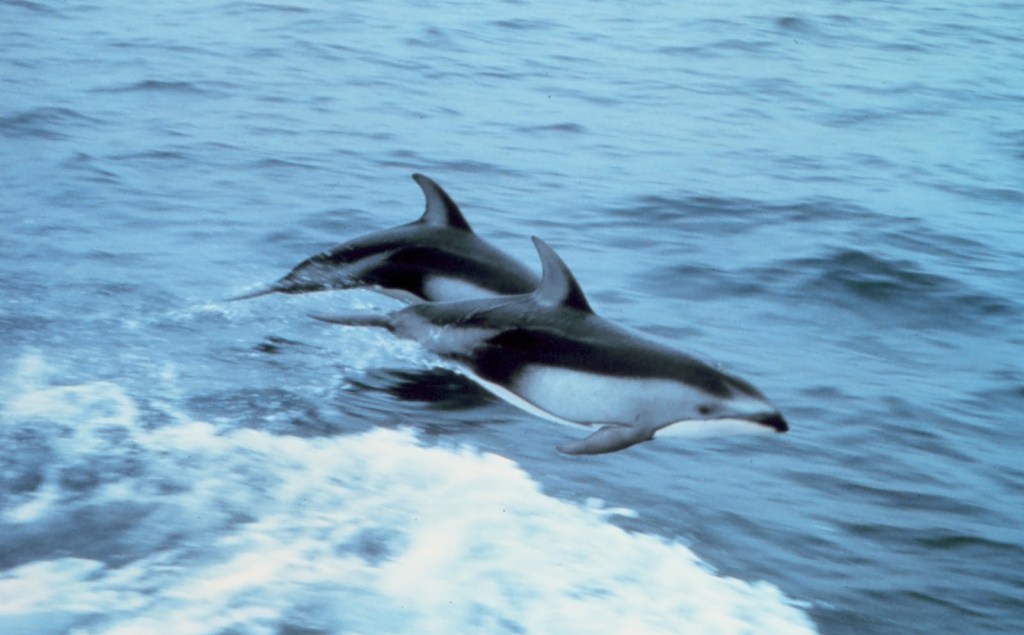
When observing from the surface, it looks like the dolphins are stealing from the whales. Northern residents would normally react with aggression, and the lack of hostility towards the dolphins compelled researchers to study this relationship further. Over time, it became apparent that the dolphins were not taking prey by force; instead, the two species were navigating hunting in a structured, mutually beneficial way. Their movements aligned in a pattern that allowed both to access food, with interactions shaped by timing, presence, and environmental cues. This discovery shows that not everything is what it seems at the surface. The division of labor between both species is easy to miss if you consider only part of the water column. At different depths, each step builds on the other, creating a sequence that neither species can achieve as efficiently alone.
Pacific white-sided dolphins’ association with northern residents also offers a different kind of advantage. In the northeastern Pacific, not all orcas occupy the same ecological role. Northern residents specialize in fish, while transient killer whales prey on marine mammals and are known predators of dolphins. The two species of whales tend to avoid each other, making it a perfect opportunity for the dolphins to find protection with the northern residents, who do not prey on dolphins. Pacific white-sided dolphins are able to distinguish between the two through differences in vocalizations and behavior. By aligning themselves with salmon-eating killer whale pods, dolphins are minimizing the risk of encountering their predators.
Cooperation between two intelligent marine predators targeting the same prey may seem counterintuitive. Predation is often framed through competition, particularly in systems where resources are declining. Yet this interaction suggests that ecological relationships may be more adaptive than they initially appear. When species bring different strengths to the same foraging challenge, cooperation can emerge alongside competition.
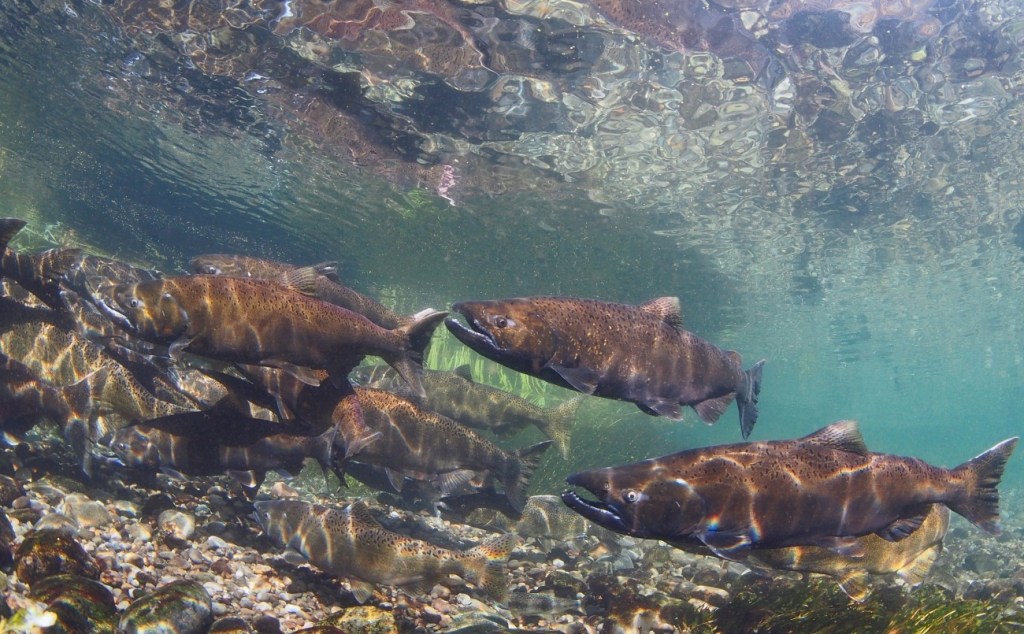
This fascinating partnership may reflect the troubling state of Chinook salmon in the Pacific Northwest. Populations of these salmon have declined across much of their range, and northern residents remain heavily dependent on them. For these endangered whales, efficiently locating prey is increasingly critical as salmon become scarcer. One concerning aspect of this partnership is that it may have emerged precisely because salmon are so limited, underscoring the particular pressure on northern residents in the region’s changing ecosystem. With Chinook populations in sharp decline, this cooperative hunting strategy could have a significant impact on the whales’ survival.
Dolphins and orcas have long shared the waters of the northeastern Pacific, often observed in close proximity. This partnership may have persisted for generations, and only recently have we begun to recognize its significance. With advances in research and a growing focus on interspecies interactions, discoveries of similar cooperative hunting patterns could emerge between other species. In marine systems shaped by shifting prey distributions and environmental pressure, coordination between predators may be an underrecognized strategy.
Alliances may form in the most unexpected ways in the Pacific Northwest’s waters. Pacific white-sided dolphins and northern resident killer whales, predators that were often cast as rivals, have quietly been working together. It is a reminder that survival is not always about domination; it entails reading the signals of another species and possibly finding advantages in cooperation. These partnerships offer a glimpse of the hidden strategies that keep the ocean’s apex predators thriving, even when the odds are stacked against them.
References
[1] Fortune, S. M. E., Cheng, X., Holmes, K., & Trites, A. W. (2025). Cooperative foraging between dolphins and fish-eating killer whales. Scientific Reports, 15(1), 42897. https://doi.org/10.1038/s41598-025-22718-4

