Written by Gabby Laipenieks and Tara Flood
In the early 1900s, while scrambling to support energy-intensive industries, the United States began building hydroelectric dams on rivers across the country. The American West’s abundant mountains and rivers made it a hotspot for dam construction—over 1,000 were built on Washington rivers alone. Hydropower relies on exploiting water’s potential energy through its storage in reservoirs and controlled release, spinning turbines that generate electricity. The technology has historically been regarded as a reliable and flexible source of renewable energy, and now makes up nearly 60% of Washington’s total electricity generation. Yet, as these iconic symbols of American engineering have come up for permit renewal in recent decades, the conversation has shifted to focus on how the climate-conscious electricity source threatens local culture, ecosystems, and fish-dependent economies. In the Salish Sea region, these issues are embodied in the Skagit River Hydroelectric Project.
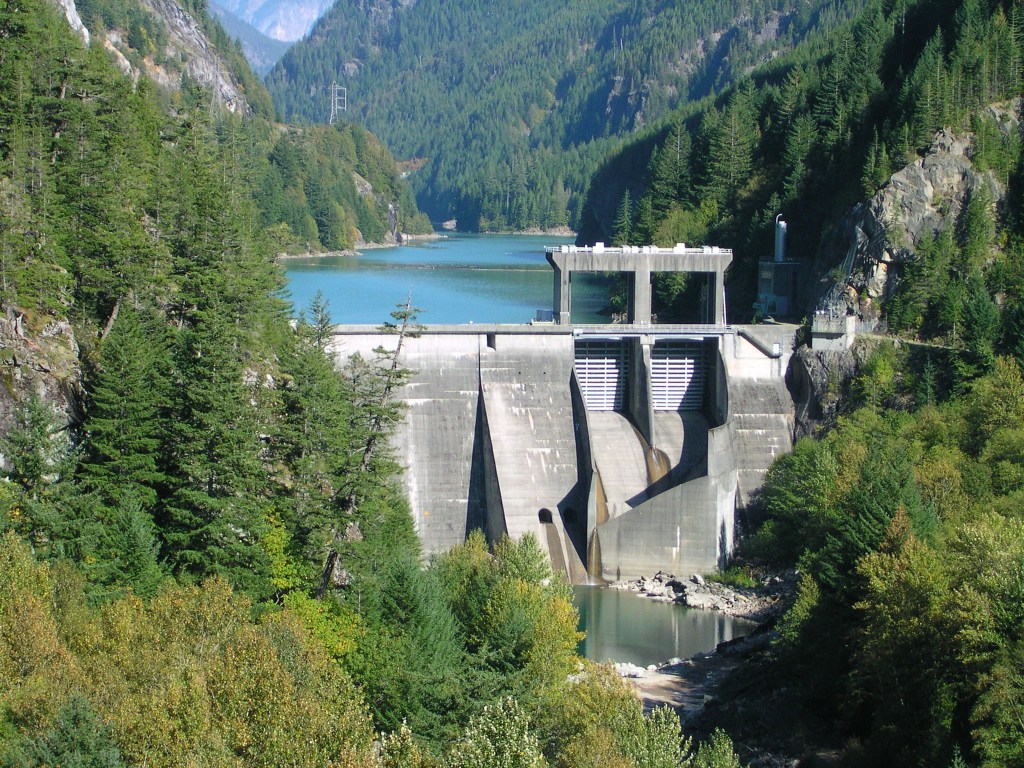
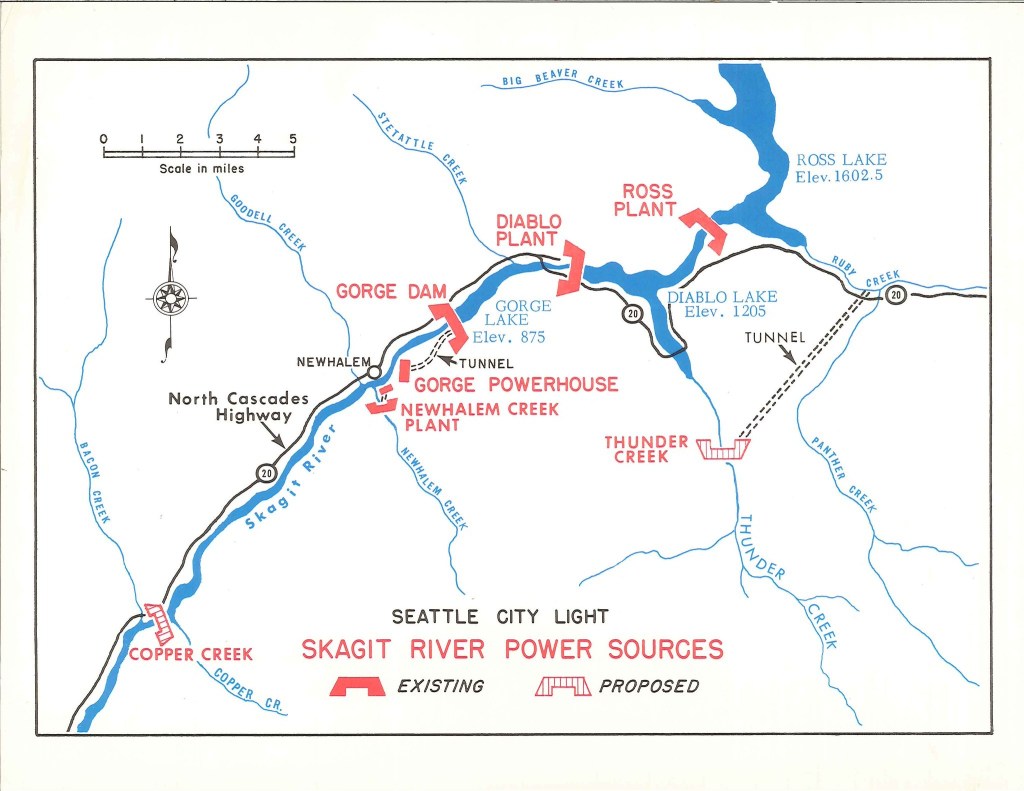
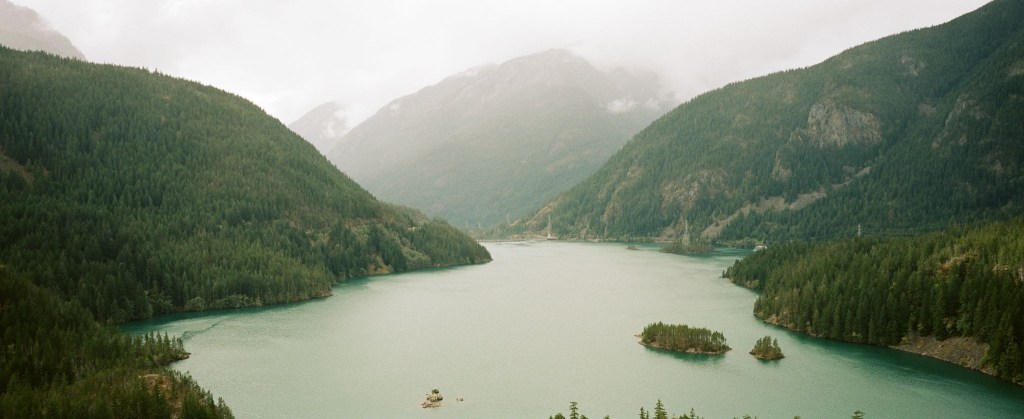
In 1924, Seattle City Light (SCL), Seattle’s public electric utility, completed construction of the Gorge Dam on the Skagit River in northern Puget Sound. Built near Newhalem, Washington, this was the first of a three-dam hydroelectric project that would soon conquer the river and create Ross Lake National Recreation Area. The 150-mile river, which flows from the Cascade Mountains of British Columbia through North Cascades National Park and into Washington’s Skagit Bay, is now obstructed by three dams in total: the Gorge, Ross, and Diablo dams. These dams and associated facilities form the Skagit River Hydroelectric Project (SRHP) and provide 20% of Seattle’s overall electricity.
Dams, culverts, and other impediments to free-flowing rivers dramatically alter how entire watershed and riparian ecosystems function. The Skagit dams are no exception. By blocking the flow of water, these impoundments change the river’s natural seasonality, elevate water temperatures, and even modify its chemical composition. These barricades also trap aquatic species, sediment, nutrients and woody debris that would otherwise move downstream, reducing productivity of freshwater and marine food webs.1 The construction of the dams’ three reservoirs also flooded spawning grounds and vital riverbed habitat for fish, amphibians, and invertebrates that depend on shallow, fast-moving water.8 Inundating these critical riparian areas not only replaced the surrounding ancient stands of trees with deep pools of stagnant water, but it eliminated expansive habitat for numerous terrestrial and amphibious species, and most notably, for native salmon.
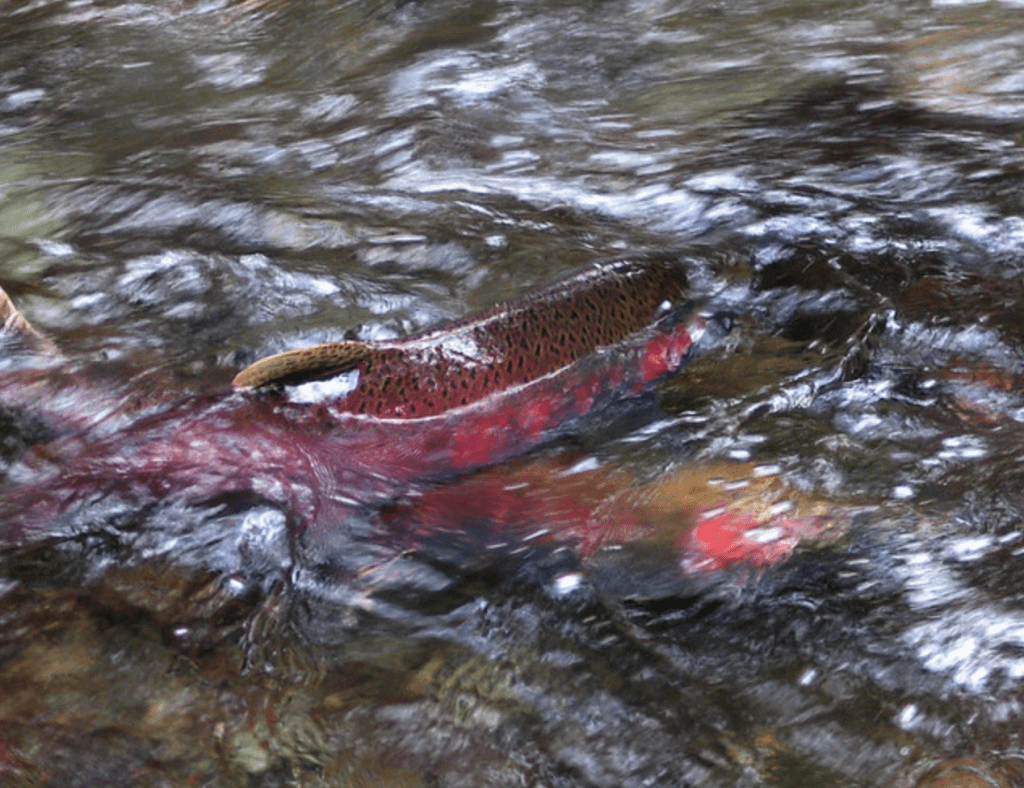
Salmon are integral to the Puget Sound region, uplifting local economies, providing food for the endangered Southern Resident orca population and indicating overall ecosystem well-being. The Skagit is one of the few remaining rivers in Puget Sound that hosts all five species of native Pacific salmon. These species are anadromous—they hatch in freshwater, venture downstream to Puget Sound and the Pacific Ocean to feed and grow in nutrient-rich waters, and then make an exhausting journey back up their natal streams to spawn. The Skagit River dams interrupt this life cycle by blocking migration in both directions.
With dams without fish passage mechanisms spanning 33 miles of the Skagit River, approximately 37% of the watershed is blocked off to anadromous fish. Cutting the river short not only decreases salmon populations but also dramatically reduces ancestral fishing grounds for subsistence fishers, violating the 1855 Treaty of Point Elliott. This treaty, made between territorial Governor Isaac Stevens and several Coast Salish Tribes, ceded millions of acres of tribal lands in the Puget Sound Region to the U.S. government with the promise of maintaining those Tribes’ rights to fish, hunt, and gather on traditional grounds. The Treaty of Point Elliot specifically guaranteed that tribal communities maintained “usual and accustomed fishing grounds” and that the availability and quantity of fish would continue to sustain traditional livelihoods. SCL initially violated this treaty when they constructed the three hydroelectric dams and blocked all fish passage upstream, and continues to operate in violation as the dams do not allow sustained access to fish in traditional areas. Declining salmon populations impact food and economic security for local communities which rely heavily on Tribal and commercial fishing in the watershed.
The Skagit dams are currently being relicensed for operation through the Federal Energy Regulatory Commission (FERC), creating a key opportunity to re-evaluate their effects. FERC is the independent federal agency that regulates interstate transmission and generation of electricity, natural gas, and oil. For hydropower facilities, FERC issues permits and licenses for new and existing projects, like SRHP, and assesses their environmental effects. For a project that may impact federally designated endangered or threatened species like Puget Sound coho and Chinook salmon, FERC works with the National Marine Fisheries Service and the U.S. Fish and Wildlife Service to assess these impacts. The previous license, which was issued in 1995, granted SCL 30 years of operation and expired in 2025—the dams are currently under a temporary annual license to continue essential operations. Because the new license could extend SCL’s permit for another 30 to 50 years, it is necessary to critically examine the dams’ cultural and ecological effects in light of the present context and future needs. The process so far has been fraught, already exceeding its initial timeline by over a year, in part due to contestations from Tribes and other stakeholders.
In early March of this year, SCL released details of an agreement that they reached with local Tribes and state and federal agencies. The utility agreed to put $4 billion toward operating the Skagit River dams over the next 50 years. That figure includes $979 million for trap-and-haul salmon transport above and below the Ross dam, which includes the construction of a road to access Ross Lake, and $200 million for habitat restoration along the river. Within this agreement, SCL also recognized the historic migration of salmon and steelhead above the Gorge Dam, a fact which had previously been hotly disputed between Tribes, SCL representatives, and scientists. This finding, which was the basis for lawsuits by the Upper Skagit and Sauk-Suiattle tribes against the utility, could potentially be used to justify a legal argument that the dams are jeopardizing Tribes’ ability to fish in usual and accustomed areas. Only time will tell if new fish passage measures will restore the runs. Seattle City Council will move forward with voting on the agreement, and if approved, the terms will be sent to FERC for final approval. Although dam removal shows promise in effectively restoring salmon populations, the option wasn’t on the table in discussions that led to the final agreement between SCL and Tribes. But will trap-and-haul salmon passage and habitat restoration be enough to revive salmon populations on the Skagit?
In a 2023 study, The USGS Western Fisheries Research Center (WFRC) explored salmonid habitat availability on the Skagit and whether typical fish stocking strategies could protect salmon populations. They found that a majority of viable habitat is upstream of Ross Lake reservoir, which is inaccessible to ocean-going fish. In the past, conservation scientists have successfully used hatcheries to produce “stock” fish to restore dwindling populations, but in their analysis, WFRC found despite moderate habitat, poor food sources would not allow stocked fish to thrive in the waters above the dam.1
WFRC conducted a separate study in 2020, analyzing the prospect of a trap-and-haul system for Pacific salmon trapped behind the Skagit River dam walls. Reviewing 17 other executions of trap-and-haul systems operating in the region, WFRC determined that while this method could “restore connectivity” of the river system, it comes with many risks.2 In previous experiments, the stress induced from collection, holding, crowding, disorientation, and potential injury could greatly reduce the fishes’ chance of survival once released. While agencies across Washington have considered trap-and-haul as a feasible fish passage method, WFRC concludes the operation is a long-term commitment with no guarantee of effectiveness. Trap-and-haul also does not solve the disconnection issue posed for other aquatic species, sediment, nutrients and organic debris or address habitat loss concerns.
Removing one or more of the Skagit River dams, although highly unlikely due to the City of Seattle’s reliance on the dams for electricity, remains a possibility. In 2020, the Upper Skagit Tribes circulated a petition to remove the Gorge Dam, stating that dewatering the river between the Gorge dam and Gorge powerhouse infringes on tribal treaty fishing rights. The petition, which received over 48,000 signatures, demonstrates the strong public support for dam removal despite currently being outweighed by bureaucratic and energy generation hurdles.
Federal cases recognizing infringement on tribal fishing rights could provide a basis for removal of one or all of the Skagit dams. The Supreme Court’s ruling in Washington v. United States (2018) asserts Washington State has violated the Tribes’ rights to fish by blocking fish passage with culverts around the state. This 2018 proceeding is the latest in a series of cases adjudicating whether state actions that infringe on salmon habitat constitute a violation of treaty fishing rights for Northwest tribal nations. Provided there are no other restoration options that will achieve full reinstatement of salmon runs to provide ‘moderate living’ levels for Tribes, dam removal could be coerced by the courts based on this precedent.3 However, it is also important to consider what dam removal would mean for communities in the Skagit River delta, whose land would no doubt be affected by the changes in flow and sedimentation.
The removal of dams on the Elwha River presents a compelling case study of river restoration. The Elwha dams, located inside Olympic National Park, cut off over 90% of the Elwha River’s viable salmon habitat, preventing critical sediment from reaching the delta near Port Angeles and causing serious coastal erosion that threatened key infrastructure. Ultimately, the dams’ negative environmental impacts outweighed their contributions to the power grid. The Jamestown-Skallam Tribe, supported by several environmental groups, lobbied over decades for the dam’s removal and was vocal in its opposition during the FERC relicensing process. Ultimately, the Department of the Interior bought the dams from its private owners in order to proceed with removal, and after a long period of planning and permitting, the dams were fully removed by 2014. Since removal, fish populations in the Elwha have rebounded significantly, including but not limited to culturally essential salmon runs. The Skagit dams’ close proximity to North Cascades National Park could facilitate a similar acquisition process by the Department of the Interior. Similar effects could result from dam removal on the Skagit, but the dams’ significant contribution to Seattle’s electricity supply nevertheless presents a formidable obstacle.
If dams in the SRHP were removed, how could the region adapt to lost energy generation? As the regional effects of climate change worsen and snowpacks become more variable year-over-year in the Cascades, hydropower may become a less consistent source of energy generation, leading to potential grid resilience challenges in a region that has only grown more populous in recent years. It may be practical for the state to invest in more resilient forms of electricity generation, including wind and solar projects. Could other energy sources make up for the watts lost if the Skagit dams were removed? More research is needed to answer this critical question. The energy lost by removal of the Skagit dams could create a backsliding effect toward heavier usage of fossil fuels, or it could spur accelerated development of other renewable energy projects. But pushing energy developments in Washington is hard to do, and even harder to do quickly. In light of these challenges, it’s more important than ever to think through solutions with careful consideration of potential cultural, environmental, and social impacts.
The struggle for salmon recovery on the Skagit River is fraught with issues emblematic of environmental governance challenges across Puget Sound—scientific uncertainties, bureaucratic complexity, and past and present tribal inequities, to name a few. Today, the decision reached by the licensing partners will have far-reaching consequences on both people and salmon. Ultimately, at the core of the conflict over the Skagit dams is a much larger question: what costs we are willing to incur in the fight against climate change, and upon whose backs will we do it?
References
[1] Duda, J.J., and Hardiman, J.M. (2023). Applying intrinsic potential models to evaluate salmon (Oncorhynchus spp.) introduction into main-stem and tributary habitats upstream from the Skagit River Hydroelectric Project, northern Washington. U.S. Geological Survey Open-File Report 2023-1077, 44 p. https://doi.org/10.3133/ofr20231077.
[2] Kock, T. J., Ferguson, J. W., Keefer, M. L., & Schreck, C. B. (2021). Review of trap-and-haul for managing Pacific salmonids (Oncorhynchus spp.) in impounded river systems. Reviews in Fish Biology and Fisheries, 31(1), 53–94. https://doi.org/10.1007/s11160-020-09627-7.
[3] Pease, M., and White, C. (2019). Conduit to tribal and environmental justice? Unpacking Washington v. United States. Ecology Law Quarterly. https://www.ecologylawquarterly.org/currents/conduit-to-tribal-and-environmental-justice-unpacking-washington-v-united-states-mike-pease-and-christina-white/.

