Currents is a blog run by students in the University of Washington's School of Marine and Environmental Affairs, offering timely discussions on pressing environmental topics, with an emphasis on marine and coastal systems. Our blog highlights interactions between humans and nature, shares SMEA student experiences, and explores diverse academic and cultural perspectives in marine and environmental fields to inform and inspire audiences with accessible, thought-provoking content.
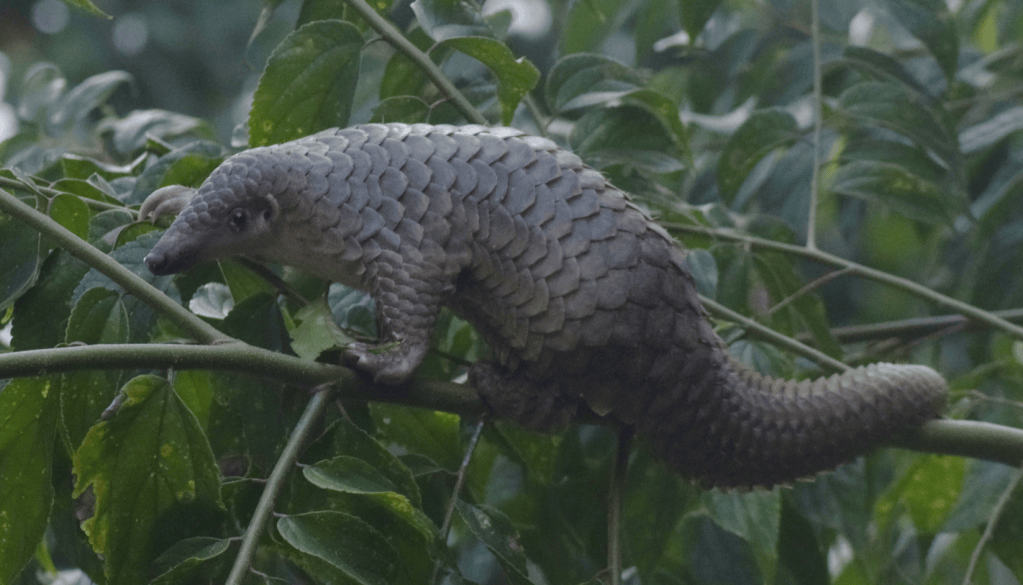
If you’ve ever seen an anteater and thought, “cute, but what if it were covered in scales, walked on its hind feet, and curled into a ball like an armadillo,” then you’re in luck – pangolins are just that. Pangolins are the most poached and trafficked animal in the world due to the traditional medicinal value of their scales, yet they are unknown to many people. While other highly poached charismatic creatures, such as rhinos and elephants, are widely known, pangolins are not A-list celebrities in the animal kingdom and have historically lacked the same amount of media attention. However, in recent years, pangolins have found their way into various forms of media, from local blogs to highly viewed streaming services like Netflix, thanks to growing anti-poaching awareness movements. This newfound media presence can not only increase awareness but also funding for local conservation groups and political incentives to protect pangolins. Pangolins’ time in the spotlight could spark a greater political will to safeguard the species and increase funding for conservation organizations.
While often called scaly anteaters, pangolins are not related to anteaters despite sharing a diet of ants and termites. Pangolins are covered in hard scales made of keratin, which is a great defense mechanism against predators when they curl up into an impenetrable ball. Unfortunately, this is not a great defense against poachers and leaves them vulnerable to being picked up and removed from their home. There are eight species of pangolins spread across regions of Africa, India, and Southeast Asia, all of which are on the IUCN Red List, ranging from vulnerable to critically endangered according to the Convention on International Trade in Endangered Species (CITES). Pangolins can be quite elusive as they are solitary, nocturnal creatures that burrow underground or live in trees. This elusivity has made ecological studies challenging, resulting in large research population gaps1. A lack of population studies makes it difficult to know how many pangolins remain and how soon they could become extinct.
Despite being classified with the highest protection level under CITES, pangolins are still poached and trafficked at extremely high rates. Some pangolins are killed for their meat, but the much larger portion are killed for their scales. Their scales are ground into a powder and used in traditional Chinese medicine and, to a lesser extent, other traditional Asian medicines. According to the IUCN, between 2016 and 2024, there were over 500,000 pangolins that were illegally traded, spanning 75 countries between importing and exporting. However, that only represents the illegal shipments of pangolins and their scales that happened to be intercepted. All eight pangolin species’ populations are declining because of their high market value, and some are nearing extinction. Increased conservation efforts are needed now more than ever.
Improving visibility for pangolin protection can come in a variety of ways, but recently, a few innovative media strategies have thrust pangolins into the spotlight. One way pangolins are gaining more attention comes in the form of a glamorous, unconventional media source: RuPaul’s Drag Race.
In Season 18 Episode 3 of RuPaul’s Drag Race, pangolins got a surprising shoutout when contestant Juicy Love Dion dressed as one for the runway. The challenge was “Animal Attraction,” and while many contestants chose more mainstream animals to represent, like tigers, swans, cows, or cheetahs, Juicy went a different route, choosing to create an outfit that resembled a pangolin. With a headdress, shoulder pads, claws, and glistening golden scales, Juicy dominated the runway and represented the pangolins in a stylish manner. During the judging, Juicy Love Dion explained her reasoning as wanting to bring awareness to the endangered species and mentioned how they are poached for their scales. With over 5000 fake scales used and a fierce walk, Juicy Love Dion not only won the challenge but also brought Pangolin awareness to the fans of Drag Race in the form of fashion 2.
With a headdress, shoulder pads, claws, and glistening golden scales, Juicy dominated the runway and represented the pangolins in a stylish manner.
In an equally entertaining but slightly less fashionable program, the 2025 Netflix documentary, “Pangolin: Kulu’s Journey,” introduces people to these loveable creatures via a heartfelt documentary. “Kulu’s Journey” tells the story of a young Temminck pangolin (Smutsia temminckii) named Kulu who was rescued from poachers in South Africa and brought to Lapalala Wilderness Reserve by the African Pangolin Working Group. Kulu’s lengthy rehabilitation process required a caretaker who could assist Kulu 24/7 for months. Gareth Thomas, a former investment manager looking for a life change, volunteered to move to the preserve and spend months with Kulu. Kulu could not be released back into the wild until he reached a sufficient weight and could survive on his own.
Kulu is a loveable main character that wins the hearts of viewers. Through daily trips around the Pangolarium (the designated area of the reserve for Pangolins), viewers get a peek into Kulu’s rebellious and stubborn personality. A documentary with an award-winning director on a large-scale platform, such as Netflix, brings in much-needed viewership for the endangered species. Paired with the story of loveable Kulu, this film brings awareness to the plight of Pangolins as well as the intensive work of conservation groups on the ground 3.
Paired with the story of loveable Kulu, this film brings awareness to the plight of Pangolins as well as the intensive work of conservation groups on the ground.
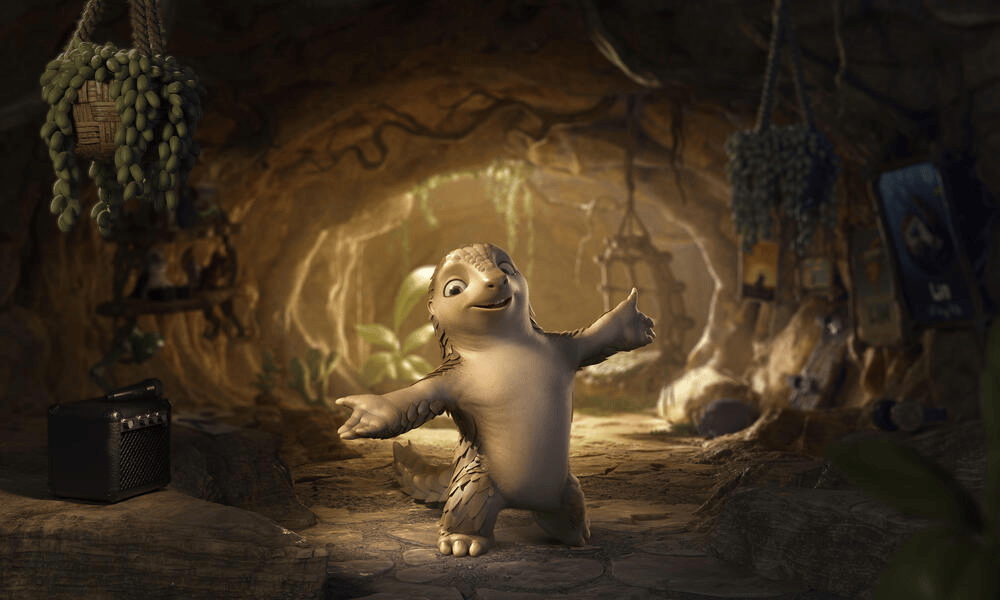
Lin the Pangolin. Photo courtesy of WWF, shared with permission.
Years before Kulu and Juicy Love Dion made it onto your televisions, the World Wildlife Fund (WWF) recognized the need for greater Pangolin representation in media. In 2020, they unveiled a virtual character named Lin the Pangolin. Lin is an animated pangolin who wants to be the main character of an animated film, so viewers can learn more about Pangolins. Lin asks people to help him become a star by spreading the word about his star-quality and conservation goals. The WWF also created various educational tools using Lin, such as slideshows and activity packets, as well as a pledge to not consume pangolin products. These tools can be used in classrooms or other less formal educational settings. While Lin has not starred in a film yet, don’t fret! It often takes many years for young stars to make it into the Hollywood scene, and the more support Lin has, the greater his chances. A blockbuster animated film starring Lin could teach a whole generation of kids about pangolins.
All three of these examples showcase the beneficial utilization of media to educate and inform. Pangolins in the spotlight can increase awareness and further conservation efforts; the more forms of media the pangolins star in, the greater the audience. These three distinct, creative approaches showcase the variety of ways in which the media can be utilized to highlight pangolins and can even inform future efforts. One study described how increasing public interest is a necessity for pangolin conservation 4. Studies have found that using social media for wildlife conservation can increase pro-conservation behavior, funding, awareness, political action, and help to protect species from poaching 5, 6. These actions are especially effective when focused on a specific species, and while none of the eight pangolin species have typically been a popular flagship species, intentional campaigns centered on them could be successful to raise awareness and resources 7. Fashion, documentaries, and educational tools with a loveable mascot are three distinct media approaches that have exposed many people to the current condition of pangolins, but further work can be done to increase media exposure of pangolins. A greater pangolin media presence can bring in funding and political incentives to conservation goals and greater resources for conservation organizations.
In addition to bringing attention to the poaching, trafficking, and approaching extinction of pangolins, it is also crucial to highlight the groups fighting against the illegal trade of pangolins. Across Africa and Asia, various NGOs are working on the ground to promote Pangolin conservation, from raising awareness and advancing political action to rehabilitating Pangolins and intercepting illegal trade. In South Africa, the African Pangolin Working Group provides treatment and rehabilitation for pangolins and also hosts education initiatives and law enforcement workshops to confront poaching. In Vietnam, ENV: Action Against Extinction is a non-profit organization that has been working hand in hand with law enforcement and helped shut down the largest pangolin trafficking network to date. These are just two examples of many dedicated groups taking multifaceted approaches to pangolin conservation to ensure the continued survival of these incredible species.
Pangolins are an incredible species and are superstars in their own right, but with the extreme level of poaching and trafficking for their scales, their situation is looking grim. Despite this level of pangolin trade, they are still an unknown creature to many Americans. So spread the word about pangolins- tell your friends, family, people sitting next to you on the train, or your Trader Joe’s cashier. The more people who can be exposed to, and fall in love with, pangolins just as I have, the greater the odds of increased conservation efforts, funding, and policy interventions. I hope that in my lifetime, all eight species can recover and be taken off the IUCN Red List. I cannot begin to describe the joy I would feel in that moment. But for now, I will celebrate the little victories of a stunning Pangolin fashion moment, a heartfelt Netflix documentary, and the aspiring star Lin the Pangolin.
References
[1, 4] Heighton, S. P., & Gaubert, P. (2021). A timely systematic review on pangolin research, commercialization, and popularization to identify knowledge gaps and produce conservation guidelines. Biological Conservation, 256, 109042. https://doi.org/10.1016/j.biocon.2021.109042
[2] Murray, N. (Director). (2026). RuPaul’s Drag Race (No. 3) [Broadcast]. In Season 18. MTV.
[3] Ehlrich, P. (Director). (2025). Pangolin: Kulu’s Journey [Documentary]. Netflix.
[5] Bergman, J. N., Buxton, R. T., Lin, H.-Y., Lenda, M., Attinello, K., Hajdasz, A. C., Rivest, S. A., Tran Nguyen, T., Cooke, S. J., & Bennett, J. R. (2022). Evaluating the benefits and risks of social media for wildlife conservation. FACETS, 7, 360–397. https://doi.org/10.1139/facets-2021-0112
[6] Wu, Y., Xie, L., Huang, S.-L., Li, P., Yuan, Z., & Liu, W. (2018). Using social media to strengthen public awareness of wildlife conservation. Ocean & Coastal Management, 153, 76–83. https://doi.org/10.1016/j.ocecoaman.2017.12.010
[7] McGowan, J., Beaumont, L. J., Smith, R. J., Chauvenet, A. L. M., Harcourt, R., Atkinson, S. C., Mittermeier, J. C., Esperon-Rodriguez, M., Baumgartner, J. B., Beattie, A., Dudaniec, R. Y., Grenyer, R., Nipperess, D. A., Stow, A., & Possingham, H. P. (2020). Conservation prioritization can resolve the flagship species conundrum. Nature Communications, 11(1), 994. https://doi.org/10.1038/s41467-020-14554-z