Written by Lou Guionnet and Abigayl Farr
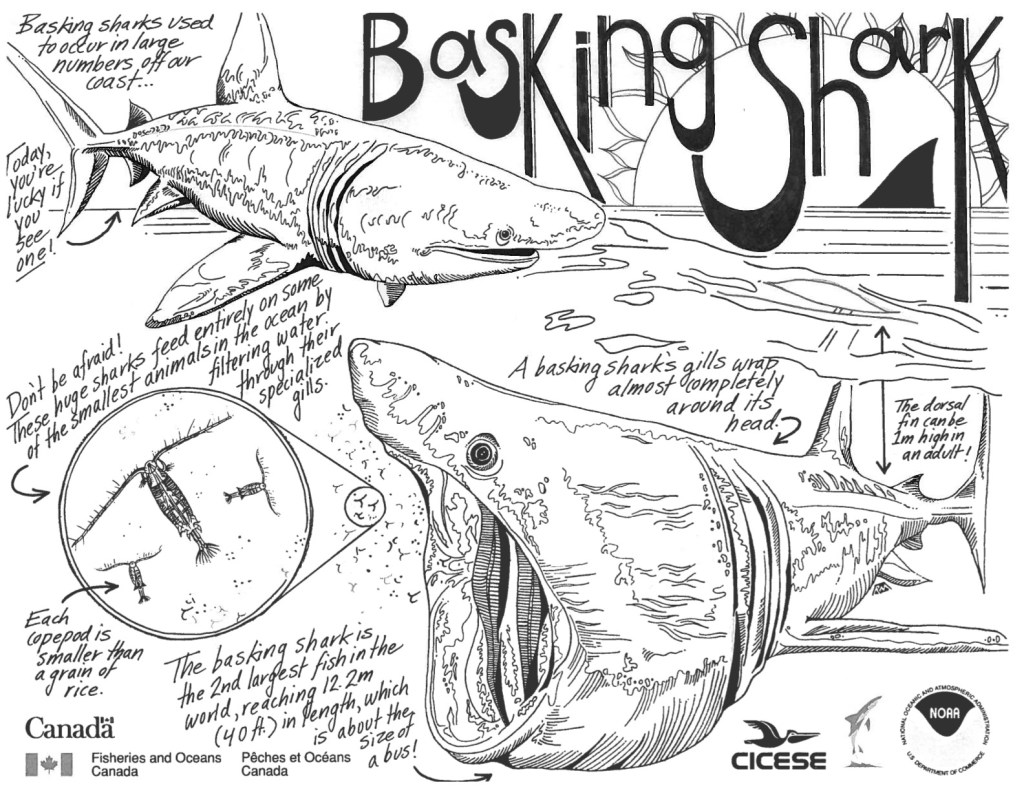
When you think of the beautiful green waters of the Salish Sea, you probably don’t picture the basking shark (Cetorhinus maximus), one of the greatest filter-feeding sharks that roam the oceans. These are not the famous whale sharks (Rhincodon typus) that cruise through tropical waters surrounded by snorkelers and divers. The basking shark’s mottled grey skin, pointed nose, as well as their reclusive nature have made them fade in the background of other shark starlets. Growing up to 40 feet (12 meters) and weighing over 5 tons (5000 kilograms), these bus-sized creatures feed solely on plankton, microscopic organisms. Surprisingly, genetic analysis shows that basking sharks’ are most closely related to sand tiger sharks (Carcharias taurus), with these toothy relatives being formidable hunters that feed on animals considerably larger than plankton.1 Both are part of the order Lamniformes, with great whites. Basking sharks, similar to great white sharks, are capable of reaching swimming speeds of 11 mph and leaping out of the water. Unlike their carnivorous relatives, which rely on bursts of speed to capture agile prey such as seals, basking sharks feed on an abundant, yet low-energy food source. As a result, they must spend much of the day filter-feeding to sustain themselves.
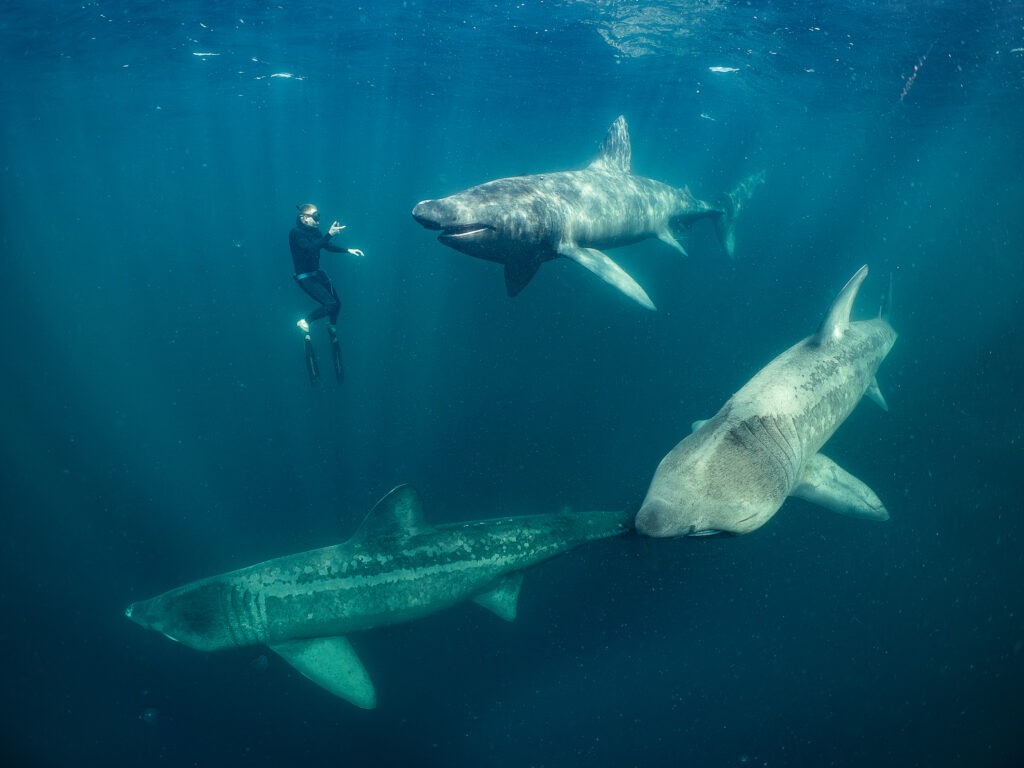
Over millions of years, basking sharks have evolved into remarkably efficient filter feeders, capable of processing up to 2,000 metric tons of seawater per hour—roughly 130,000 gallons every hour—as they sieve plankton through their gill rakers. At peak feeding rates, a single shark can filter enough water in an hour to rival the volume circulated by some residential pool systems in an entire day.2, 3 Basking sharks collect their food using their gill rakers, thin pieces of bone and cartilage, which filter and catch appropriately sized particles to be swallowed. As migratory species roaming the open ocean, they are hard to catch a glimpse of. Sightings often occur when they are “basking” in the sunlight, at the surface where plankton are plentiful. These mellow giants roam around the oceans following algal blooms as the seasons change across the planet. In the Pacific, they can be found ranging from Baja California to Hawaii and even into the Pacific Northwest.
On the West Coast, especially in the Salish Sea, few people know that basking sharks once inhabited these waters in the hundreds. Harriette Shelton Dover recorded what may be a reference to the species in a Snohomish ancestral legend:
“He said, ‘It was long, long like a whale and on its back it had lots of fins, not just one like the whales have.’ […] I heard about that animal only once. It did not frighten us, since we felt it was seen so long ago. Once in a while, we used to talk about it and wonder where it went.”
In the early 1900s, basking sharks were so abundant in the Salish Sea that large schools would stop fishing vessels in their tracks. Their abundance began causing major problems for the fishing industry. During the salmon fishing season, basking sharks were often caught in salmon gillnets and seines. Their skin is covered in mucus, and its rough texture would shred and damage nets. 4 This cost the industry thousands of dollars in damages each year. At the time, each gillnet could range between $43 to $50, amounting to $580 to $674 today. 4 Entanglement was likewise damaging to the population of basking sharks — it is estimated that several hundred were killed as bycatch each year.
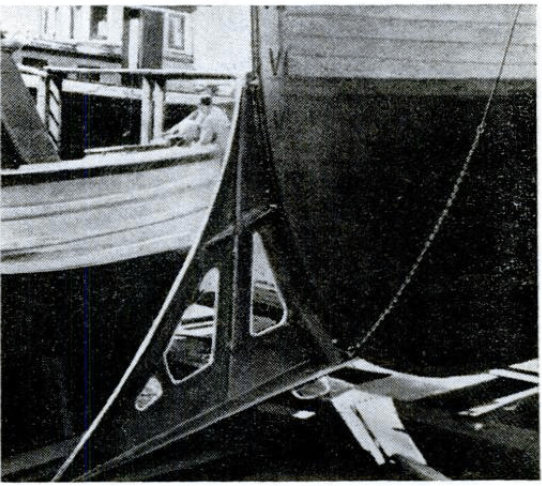
Around 1937, fishermen became vocal with their concerns regarding the damage these sharks were causing to their nets and subsequently the fishing industry. In one instance, a fishing vessel lost 70 nets in 7 days, costing upwards of $47,000 today. 4 By the early 1940s, fishermen were calling for the eradication of basking sharks. In 1943, a news journal released a headline story: “War Declared on B.C. Sharks.” This led to the construction of a boat called the “Razor-Billed Shark Slasher”, fitted with a steel ram for the purpose of killing basking sharks. It killed six sharks in its first season. By 1949, these sharks had found their way onto the Canadian Federal Fisheries Department’s list of “destructive pests”. Further, Canada’s Department of Fisheries and Oceans authorized a kill on sight order, allowing anyone to kill basking sharks. Six years later, Canada launched the shark eradication program, aiming to kill every last basking shark. Four fishing patrol boats were fitted with a cutting blade lowered just below the water’s surface to slice the sharks in half. 4 The deadliest boat, named Comox Post, killed an estimated 413 basking sharks over 14 years. 4 The Laurier was not far behind; a deckhand working on the vessel at the time estimated they killed between 200-300 basking sharks 4, although numbers are unverified. Required annual reporting by the fishing patrol vessels saw a decrease of killings as the years progressed, indicating that fewer basking sharks remained in the area. This program is estimated to have reduced the eastern North Pacific population by 90 percent and the fishing industry deemed it a success.
Shark fisheries have only compounded the effects of the eradication program. In 1920, a newspaper article claimed that sharks are nutritious foods, encouraging development of shark fishing industries. 4 Shark livers contain oils that are high in vitamin A, and are commonly used to make supplements. Large shark fisheries lasted through the end of World War II, when synthetic lubricants began to replace shark oils. Despite difficulties harvesting and processing the enormous fish, fisheries highly valued basking sharks for their sheer size. With about 1000 pounds of liver per shark, fisheries could make the equivalent of $560, amounting to $3,740 in today’s dollars. 4 Between 1941 and 1945, an estimated 800,000 pounds of mixed shark liver was harvested. Mixed shark consisted of a variety of shark species, including basking, brown cat (Apristurus brunneus), blue (Prionace glauca), sleeper (Somniosidae), and salmon (Lamna ditropis) sharks. Overall, it is estimated that commercial shark fishing between 1940 and 1948 removed hundreds of basking sharks from marine ecosystems. 4
The docile species that was once known as a natural part of the marine fauna became portrayed and treated as a public enemy.
The media inflamed the public’s perception of basking sharks and fueled the campaign to exterminate them from the Salish Sea. Newspapers called these gentle giants “great brutes” and “salmon-killing monsters” even though these plankton-feeding sharks do not eat salmon. The demonizing of these sharks by the media and salmon fisheries led to harassment of basking sharks; they were harpooned, shot at, rammed, and killed for sport. People would pretend they were whalers, using basking sharks as target practice. Some sources mention young men speeding at basking sharks in small boats, using their massive size as launch ramps to shoot themselves into the air. 4 The docile species that was once known as a natural part of the marine fauna became portrayed and treated as a public enemy.
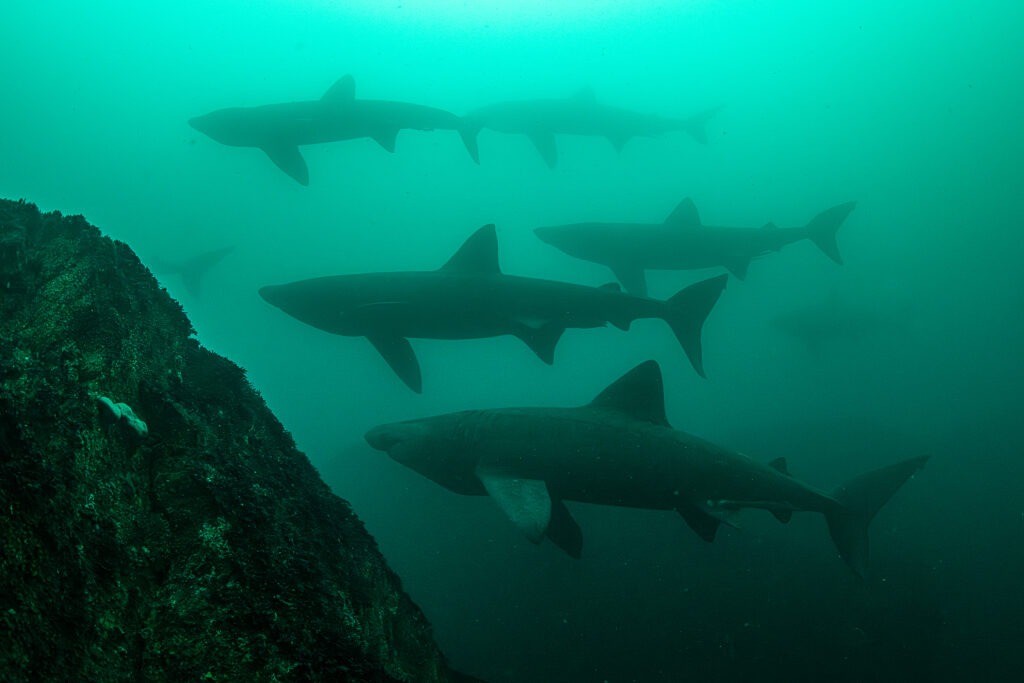
Sightings of basking sharks have decreased dramatically since the early 1960s, with true population estimates for the North Pacific undetermined. Since 1996, there have been only 42 confirmed sightings in Canada, with the last in 2010, and 30 in Washington, with the last in 2014 in Edmonds, Washington. These sharks used to school with upwards of 60 individuals. Yet, the largest schools reported since the 90s have been 10 individuals, with an average of three. Additionally, between 1996 and 2006, no basking sharks were caught in gillnets. Canada did not put protections into place until 2010, so the lack of bycatch is most likely due to diminished population size. 4 Basking sharks were once a daily sight in the Salish Sea. Today, they are incredibly rare.
Critical aspects of the basking shark’s biology make population recovery exceptionally slow. These sharks can live for 50 to perhaps even 100 years, and their reproductive cycle reflects that longevity. Baby shark embryos stay in their mother’s uterus for 18 months to 3 years, occasionally eating one another, resulting in relatively small litters. All of this means that once basking shark populations decline, recovery can take decades even in the absence of additional disturbances. Despite their enormous size, basking sharks remain difficult to study, and critical details of their reproduction, such as timing and location, are still unknown. Their slow reproduction and low population numbers make them especially vulnerable to decline, a risk compounded by their tendency to aggregate by sex. In Japanese and Scottish waters, roughly 70–90% of recorded individuals were female, while populations observed near Newfoundland were predominantly male.
Because basking sharks have largely been lost from the Salish Sea, it is difficult for researchers to fully understand the critical role they may have once held. This loss may already have introduced unaccounted-for imbalances. Thanks to their consumption of plankton, basking sharks, alongside baleen whales (which have also suffered declines) may have maintained balance in food webs by regulating the lower levels of the food chain in cold waters. Basking sharks stabilize ecosystems experiencing rapid environmental change, especially warming sea surface temperatures that stimulate plankton population growth.7 As incredible migrators, basking sharks follow the cold currents that cycle through all 5 ocean zones, effectively connecting these basins and acting as indicators of overall ocean health. Due to their migrations and their role as plankton-feeders, basking sharks may contribute significantly to nutrient and carbon cycling, at the very core of marine food webs.
Around the world, protections are now in place to prevent basking shark populations from declining further. The Convention on International Trade in Endangered Species of Wild Fauna and Flora (CITES) listed them in Appendix II, which strictly regulates any trade and requires proof of sustainable harvest in 2002-2003. In 2005, basking sharks were listed in both Appendix I and II of the Convention on Migratory Species, which unites countries internationally to protect migratory species and their habitat. They are listed as endangered on the IUCN Red List. In 1997, NOAA Fisheries established that white, whale, basking, sand tiger, and bigeye sand tiger sharks cannot be retained, possessed, sold, or purchased. In 2000, the United States passed the Shark Finning Prohibition Act, prohibiting the processing of shark fins on fishing vessels as well as the practice of harvesting only fins and discarding the carcasses. The Department of Fisheries and Oceans Canada established a recovery plan for them in 2019. Similar laws and protections were passed in Europe and the UK to protect sharks, including basking sharks. In 2022, Ireland gave basking sharks full protection under the Wildlife Acts, effectively ending the historical fishery targeting their livers. Citizen scientists, led by non-profits like the Irish Basking Shark Group, have been raising awareness through education as well as reporting sightings, tagging the sharks, and identifying them through non-invasive photographs since 2009. These efforts have led to a small resurgence in the basking shark population off the coast of Ireland. With some 200 sharks aggregating off the coast, the incredible sight of these massive giants has attracted locals and tourists alike, bringing significant media attention to the basking shark. In March of 2024, a group of basking shark enthusiasts convened to talk about the future of these sharks within the Salish Sea.8
We can hope that in future decades, basking sharks will once again bask on the surface of the Salish Sea peacefully and unbothered.
Many people along the West Coast are taking steps to raise awareness of these important, gracious, and awe-inspiring creatures. A research associate at OSU, Alex McInturf, encourages all sightings to be reported to her at alexandra.mcinturf@oregonstate.edu, whether caught as bycatch or spotted while cruising on a ferry. She and her colleagues hope to establish a website where sightings can be shared and tracked to better protect these sharks in the Eastern Pacific. Here in Washington, Lisa Hillier at the Washington Department of Fish and Wildlife (WDFW), an advocate for all of our Washington sharks, also recommends that sightings be shared with WDFW. Increased boat traffic and fishing activities in Puget Sound put these peaceful, sun-loving giants at risk of injury or death, especially if we don’t understand their distribution patterns. The states’ no-take laws prohibit the capture of these sharks and require their release if they are caught as bycatch. The public can learn more and support these sharks by keeping an eye on the basking shark exhibit, which is still in the planning stages at The Shaw Center for the Salish Sea in British Columbia. Given the encouraging population recovery of basking sharks observed in Irish waters, we can hope that in future decades, basking sharks will once again bask on the surface of the Salish Sea peacefully and unbothered.
References
[1] Naylor, G. J. P., Caira, J. N., Jensen, K., Rosana, K. A. M., Straube, N., & Lakner, C. (2012).
Elasmobranch phylogeny: A mitochondrial estimate based on 595 species. In J. C. Carrier, J. A. Musick, & M. R. Heithaus (Eds.), Biology of sharks and their relatives (2nd ed., pp. 31–56). CRC Press.
[2] Motta PJ, Maslanka M, Hueter RE, Davis RL, de la Parra R, Mulvany SL, Habegger ML,
Strother JA, Mara KR, Gardiner JM, Tyminski JP, Zeigler LD. (2010). Feeding anatomy, filter-feeding rate, and diet of whale sharks Rhincodon typus during surface ram filter feeding off the Yucatan Peninsula, Mexico. Zoology (Jena). Aug;113(4):199-212. doi: 10.1016/j.zool.2009.12.001. PMID: 20817493.
[3] Sims, D. W. (2008). Chapter 3 Sieving a Living: A Review of the Biology, Ecology and Conservation Status of the Plankton‐Feeding Basking Shark Cetorhinus Maximus. In Advances in Marine Biology (Vol. 54, pp. 171–220). Academic Press. https://doi.org/10.1016/S00652881(08)000035
[4] Wallace, S., & Gisborne, B. (2006). Basking Sharks The Slaughter of BC’s Gentle Giants. Transmontanus.
[5] McPhie, R., Cashion, M., McInturf, A. G., Saldaña-Ruiz , L. E., Elliser, C., & Broadhurst, G. (2024). Basking Sharks in the Salish Sea and Beyond: Expanding and Defining a “Basking Shark Enthusiasts Club”. Workshop Summary Report. (p. 22). Ocean Decade Regional Collaborative Center for the Northeast Pacific, Victoria, BC, CA. https://salishsea.wwu.edu/sites/salishsea.wwu.edu/files/2024-08/Basking%20Sharks%20in%20the%20Salish%20Sea%20and%20Beyond_Final.pdf
[6] Motyer, N. (2025, November 18). Resurgence & recovery of the basking shark. An extract from Beneath Irish Seas: The Hidden Wonders of Ireland’s Amazing Marine Life. Books Ireland. https://booksirelandmagazine.com/resurgence-recovery-of-the-basking-shark/
[7] Sun, R., Liu, K., Huang, W., Wang, X., Zhuang, H., Wang, Z., Zhang, Z., & Zhao, L. (2024). Global distribution prediction and ecological conservation of basking shark (Cetorhinus maximus) under integrated impacts. Global Ecology and Conservation, 56, e03310. https://doi.org/10.1016/j.gecco.2024.e03310
[8] Mieras, P. A., Harvey Clark, C., Bear, M., Hodgin, G., Hodgin, B., Larson, S. E., & Lowry, D. (2017). Chapter Five: The Economy of Shark Conservation in the Northeast Pacific: The Role of Ecotourism and Citizen Science. In Northeast Pacific Shark Biology, Research, and Conservation, Part B (Vol. 78, pp. 121–153). Academic Press. https://doi.org/10.1016/bs.amb.2017.08.003
 Currents